That's how it is. Period.

Wednesday, April 18, 2012

Let's not throw the baby out with the bath water


        Hey, look: We don’t want the oil companies to drill here (NIMBY), nor there or anywhere. So, how many of us have abandoned our automobiles (which are significantly more dangerous to our children) and unhooked our homes and businesses from natural gas to cancel our need for fossil fuels?
        While I appreciate NOAA’s mission to save us from ourselves, it seems odd that one of its scientists would be out discussing a study (Erie) that scares the daylights out of people, but apparently hasn’t been vetted or even published yet for review. This is a sure recipe for panic.
       Further, knowing something of the critical role fossil fuels play in the newspaper industry, I was surprised to see Times-Call business editor Tony Kindelspire jumping aboard the anti-fracking bandwagon (April 1 column), for it should be clear that this issue is being exploited as a way to stop all drilling.
       In his April 4 guest column, former city manager Gordon Pedrow wants each municipality to be allowed to put its own restrictions on drilling. The Colorado Legislature long ago considered that aspect and decided, properly, that to avoid the chaos which overregulation brings, the state must keep control. For the city of Longmont to even consider suing the Attorney General of Colorado for enforcing the law is not a good idea.
      Instead, I say, use that lawsuit money to chip-seal the streets. Uh-oh. That would require using lots of oil and where does it come from?
      Please, I’m not out to harm children. Also, I respect the gentlemen mentioned here and honor their freedom of speech.
     Meanwhile, I feel sorry for the people who have to drive to work in order to make a living. Shut down drilling and there’s no place for gasoline prices to go, except up.

Wednesday, February 22, 2012

Some off-the-cuff remarks about the press


---The Obamagenda of killing our nation’s oil and gas industry is finally being felt locally as nervous politicians buy into the exaggerated fracking scare by issuing frantic moratoriums all over the place as if this practice will surely bring the World to an end tomorrow, when we know that this threatened destiny is simply not true . . . The drilling companies drill because they own (or alternately lease, I suppose) the mineral rights and Colorado already has pretty stiff rules regarding how and where they drill . . . And of course, Obama’s pompous veto of the Keystone Pipeline is never mentioned in any of the anti-fracking reports or the editorials.
---Reflecting the media-hyped fracking scare, Erie officials are reportedly all up in the air over some sort of a study that allegedly shows that levels of butane, ethane and propane in Erie’s air were “large.” , , , Dumb me, all along I thought these were products derived from refining crude . . . But then, according to the news report, the bearer of the alarming information, a scientist, backed off almost immediately by saying the data don’t definitively show that drilling is the cause. . . . Having resided in Erie for four years, 1998-2002, (The Conarroes started the Erie Review newspaper years before that) my wife and I enjoyed living there but did notice the occasional smog, some of which undoubtedly drifted in from Denver, also from a nearby sanitation plant that seemed to contribute . . . But, like it or not, Erie is the site of a huge, active dump which covers the countryside and nobody for sure knows precisely what is leaking out of it . . . Not to be ignored if we abide by scaremongering is Erie’s positioning over an underground coal field (as are Lafayette and Louisville) that naturally emits methane, radon and Heaven only knows what else through the ground into the atmosphere.
      Watch for more comments on the news . . . Thanks! 

Monday, February 20, 2012

TABOR: Participatory democracy in a free republic

      I’ve lived in Colorado 84 years and have never seen anything quite like the persecution of Douglas Bruce for authoring the 1992 voter-adopted TABOR amendment to the Colorado Constitution. Despite some adjustments, judicial I presume, such as allowing the use of Certificates of Participation to increase debt without a vote of the people, TABOR’s core values remain intact. I do not know of any tax-supported institution in Colorado that has had to shut its doors because of TABOR. Now, however, in a rather curious dovetailing of related events, a lawsuit has been filed to repeal TABOR, claiming of all things that its inception via the initiative process is a violation of our representative form of government and therefore unconstitutional.
      Partly through his own arrogance, Bruce was targeted for abuse not only by government insiders who vehemently oppose TABOR because it stifles their appetite to tax-and-spend, but also by their counterparts in the media and think tanks who cry anti-government and see nothing wrong with running-up huge public debts (a la Washington, D.C.).
     He likely was wrong in kicking a news photographer in the shins. However, as a former long-time newspaperman myself, I wonder just how necessary it was for the cameraman to be that close to his subject in the first place.
     That Bruce’s political enemies finally succeeded in putting him in jail  may be seen by some as a triumph. But to others, including myself, his brave, one-man act of forcing Colorado and its political subdivisions to avoid the same financial insolvency that several other sans TABOR states now grimly face is the real victory.
     For those who claim they can’t possibly live under TABOR, submit your own repeal initiative and we’ll vote on it. Are we not capable of governing ourselves?

LAWSUIT TO REPEAL TABOR FILED IN FEDERAL COURT--
     The year 1992 was eventful not only for Douglas Bruce but also for an attorney now seeking to overturn TABOR. In its 2/16/12 edition, The Denver Post reported that one of the lead attorneys arguing for repeal is former Colorado Congressman David Skaggs (D) of Boulder. Readers might recall that he was caught up in the 1992 House bank scandal.  According to a Washington Post article dated 4/17/92, Skaggs led the Colorado delegation in overdrafts by far, with 57. Wayne Allard (R) had none, Ben Nighthorse Campbell (D) none, Joel Hefley (R) 3, Patricia Schroeder (D) 5 and Dan Schaefer (R) 6.


Monday, February 13, 2012

Tax subsidies for Twin Peaks Mall may be unfair

By Percy Conarroe
(Written 5/13/2009)

        Should Longmont’s taxpayers help bail out the ailing Twin Peaks Mall and, if so, then why not extend that favor to every business in town? This gnawing question of fairness weighs heavily on the minds of many locals, as city officials consider negotiating a public-private partnership deal with the mall owner.
        Let’s face it: Shopping malls across America are losing their oomph, no matter their location, status or upgrading. The sagging economy and inflated gasoline prices played a part, but the word “anachronism” might better fit the declining shopping-mall era. Fickle shoppers, famous for flitting from mall to mall, are fleeing to the stand-alone big boxes and, ominously, to the matchless variety and convenience of the Internet where, of course, they don’t even have to pay sales taxes.
        On April 16, 2009 the nation’s second largest mall owner, General Growth Properties Inc. of Chicago, filed for bankruptcy. Of the 200 malls GGP owns, four are in Colorado: Park Meadows in Lone Tree (south Denver), Foothills in Fort Collins, Southwest Plaza in Littleton, and Chapel Hills in north Colorado Springs. All of these four are considered upper-tier. Chapel Hills, one of the newer malls in Colorado Springs, lured shoppers from the Citadel Mall in east Colorado Springs, which earlier had plundered the Sears-anchored Southgate Mall on that city’s south side. City officials naturally don’t care who wins the dizzying mall game, so long as the tax revenues keep flowing.
          Having lived in Colorado all my life and being a casual observer of shopping malls around the state, very few of the once-flourishing malls are left. Although not the oldest, Denver’s Cherry Creek is probably still the classiest. Louisville tried valiantly to get into the mall game in 1980 but developer Jacobs-Kahan of Chicago had no luck signing an anchor store and finally gave up.
           Retail outlet stores (mini-malls) were popular for a while. Clusters sprouted up at places like Silverthorne and Castle Rock. Probably the most successful was at Loveland -- until the Centerra strip mall opened nearby.
          Even Urban Renewal with its eminent domain power and tax increment financing “partnering” with local taxpayers could not save Englewood’s charming Cinderella City Mall, which opened in 1968 to compete with the nearby Villa Italia Mall, built in 1965. Despite the investment of millions of TIF tax dollars to renovate it mid-term, Cinderella City, an elaborate, covered complex, was demolished in 1999.
         Villa Italia, despite a $120 million infusion of cash by the City of Lakewood in converting it to a “sustainable” mixed-use housing/stores complex, and after changing the mall’s name to Belmar, it still lost anchor stores Dillard’s and J.C. Penney and has never recovered. Shoppers complained that the “village feeling” of the mixed-use concept was confusing and made the mall hard to navigate.
         Boulder’s Crossroads Mall, funded almost entirely with huge amounts of Urban Renewal TIF money--those who know will not reveal the total indebtedness--ran into trouble when the Westminster Mall just down the road (both opened in the early 1960s) began expanding. But of course, the Westminster Mall had diverted shoppers from the once-prosperous Northglenn Mall, helping shut it down. Then, with Broomfield’s bold, new Flatiron Mall arriving on the scene in 1999, the City of Westminster spent $7.5 million helping its mall owner renovate, but to little avail. Flatiron had lured shoppers away from both the Westminster Mall and the Crossroads Mall (refurbished in 1983; closed in 2004 and renamed TwentyNinth Street) and neither has recovered. All the Crossroads stores except Foley’s were demolished.
         The onus is now on Flatiron. Its age and vulnerability are showing and stores are shuttering. The new Event Center nearby is struggling. Looking ahead, no doubt, Broomfield officials, in reconfiguring the city’s boundary into a county, made sure to secure, yes, a viable mall site at the junction of Colo. 7 and I-25, pretty far removed. But upscale anchor stores are scarcer than ever, and discount retailers, disdaining the stiff mall rent, find they can operate just as well on the periphery – in Longmont, that’s mostly just west across the street.
              Mixed-use or not, the Longmont City Council has no business diverting tax revenue through TIF into this privately owned mall project -- “on the come” or for any other concocted reason, such as “infrastructure.” Obviously, if TIF availability is a deal killer, then that should raise some red flags.
             “Blight” is a term that, unfortunately, reflects negatively on both the property-owner, for letting his holdings deteriorate and doing nothing about it, and the City Council and manager, for allowing it to continue.
       The city should get down to business: shut off the TIF spigot, fire the high-priced consultants, tell the mall owner to present his financial capability, submit his plan for review, and whenever he is ready, let’s see the renovating start—without leaning on the taxpayers.

Friday, February 10, 2012

To be fair, shouldn't our mayor endorse other forms of marriage too?


        About modern-day Longmont—and I’ve lived in Boulder County for 43 years--it seems that no sooner does one divisive issue such as the proposed LifeBridge annexation fade away, than another controversy arises. In this case, it's the mayor’s action in endorsing same-sex marriages on an advocacy website.
       That he has every right as an ordinary citizen to endorse whatever he chooses is indisputable. But I also believe that his signature as mayor indicates or at least strongly implies that he is speaking in behalf of the people of Longmont when, as far as I know, the council has never taken a position on this issue. Nor do we know how many people in our community might feel that if it is wrong to restrict the right to marry, then that freedom should be extended equally to people who passionately believe in polygamy or even same-blood marriage, who plead that they too are being discriminated against.
        The Longmont Municipal Code provides, among other things, that the city council shall consist of seven members, one of whom is mayor. Each council member is required to affirm support for the U.S. and Colorado constitutions.
       Federal Law (1 U.S. Code Sec.7): Under the Defense of Marriage Act (DOMA) the word marriage means only a legal union between one man and one woman as husband and wife.
       Colorado Constitution (14-2-104(1)(b): Requires a marriage to be between one man and one woman. Like the federal government, Colorado does not recognize same-sex marriages even if performed in the six states that allow them: New York, Vermont, New Hampshire, Massachusetts, Connecticut, Iowa, plus Washington D.C.
       If dozens of mayors across the land wish to sign the advocacy website, that’s between them and their constituents. What happens in Longmont’s local government is my business and yours, as residents.


Wednesday, November 30, 2011

Cooling-off period advisable


     It’s all in the family—the Democratic Party, that is, which enjoys a stranglehold on Boulder County government. First, let it be said that if the three Boulder County commissioners were Republicans engaging in the same sort of behavior, I would criticize them as well. What’s going on here may be perfectly legal, but to some of us it’s objectionable.

    Case in point: The position of County Attorney is up for grabs as of Dec. 21 and term-limited Boulder County Commissioner Ben Pearlman, chairman of the board, says he wants the job, which would amount to a hefty salary increase. (Commissioner $87,500; County Attorney $110,000/$160,000, present CA who is retiring draws $159,220.)

     The fact that Pearlman worked in the county attorney’s office before running for commissioner gives him an advantage that cannot be ignored by his fellow commissioners, no matter their pledge to consider every applicant. However, it will be difficult for commissioners Cindy Domenico and Will Toor to escape the appearance of insider favoritism if they do appoint him. Yet they could look equally bad if they don’t. People might wonder why.

     Future remedy? The City of Louisville at the prodding of resident John Leary adopted a strict Ethics Code in 1992 that, among other things, prohibits Louisville’s elected officials from becoming employees of the city until two years after leaving office. It’s working nicely.

     Maybe it’s time to outsource the county’s legal services. There are plenty of law firms around that should be interested in bidding for a stake in this gold mine. Since the county has to hire special counsel whenever a sticky case arises anyway (e.g., the county’s failed crusade against the Rocky Mountain Christian Church), then why not seek bids and contract out the whole caboodle? Surely, county law is not all that complicated.

Saturday, August 06, 2011

Public business, off the beaten path

Some thoughts about the Colorado newspaper industry and its leadership organization, the Colorado Press Association.

WHERE'S THE TRANSPARENCY?

News release: “CU-Boulder names steering committee, discussion groups to plot future of a school or college in the area of information, communication, journalism, media and technology ICJMT,” sent out by the university and forwarded by email on 6/24/11 to past presidents of the Colorado Press Association.

Of the eight discussion groups described in this press release, I see no hint of the small-town publisher’s journalistic “needs.” What sort of an education does it take to be one? These grassroots communicators never ask for special treatment, but institutionally they outnumber dailies in Colorado by about 4 to 1.

But most surprising is that the meetings of these discussion groups at CU will be open to other faculty to attend by invitation, “but are closed to the media.”

We journalists are supposed to frown on the practice of government conducting public business behind closed doors, yet when a public institution decides that it’s okay to shut out the media when deciding the nitty-gritty of how journalists shall be trained, we are expected to look the other way?

POSTAL SERVICE PROBLEMS

It’s a fact: The Postal Service lost $8 billion last year and is pondering the closing of 1 in 10 retail outlets. It has 3,600 offices out of 31,000 up for review. Over the decade, it has closed 7,000 offices.

Of the 3,600 currently facing closure, 61 are in Colorado. A few names I’m familiar with: Arriba, Joes, Matheson, Red Cliff, Wild Horse. (Source: WSJ.) I don’t think any newspaper towns are involved so far. But anytime rural postal service is rejiggered, what happens in one town often negatively affects the newspaper in the nearby town that has subscribers there. Possible outcome: More distribution headaches for small-town publishers.

THE SOUND OF SILENCE

The Colorado Supreme Court in my opinion made a bad decision in letting a Colorado governor use his personal cellphone to conduct public business, declaring it off limits as private when asked by the media to see a list of calls he made.

It is in times like these that the Colorado Press Association should have immediately issued a carefully worded blast for members to voluntarily reprint, challenging the Court’s finding. The newspaper involved protested editorially, but that’s not the same as blanket criticism emanating from the majority of Colorado’s Fourth Estate.

Legally, newspapers have lost a lot of ground in Colorado (take note, J-School) and this is but one example. Just as these words are being written an appeals court decided it’s okay for local officials to cast secret ballots, even in making routine decisions. Transparency, anyone?

What’s so frustrating about so many of these decisions is that it’s invariably the public who is the big loser over the long haul, not the newspaper. We either have open government, or we don’t.

TALK ABOUT OPPORTUNITY

Like the CU J-School turmoil, it seems that some group or groups decided that the Colorado Press Association also needed to be blown to smithereens in order to save it. Once the dust gets settled after all of the commotion and social networking at 1336 Glenarm Place in downtown Denver, I’m hoping to see the display advertising content of The Colorado Editor grow back to its once self-sustaining level. This month there was only one ad. The pages of the Editor, the CPA newspaper directory, and the annual convention program all offer affordable advertising opportunities for media-oriented businesses to connect with newspaper industry insiders. CPA needs revenue, and selling more advertising—although admittedly a tough go—is still a viable option.

As far as I know, CPA is still a press “ink on paper” organization and should be leading the way, by carrying a healthy run of advertising in its own publications.

TAKE HEART, SMALL-TOWN NEWSPAPERS

Having published several different small-town newspapers during my 50 years in the news business, I’m pleased to see the national media finally wakening to the critical importance of these small-town information centers. Thanks to author Judy Muller, whose new book “Emus Loose in Egnar,” according to previews, will do much toward igniting a new reverence for, and understanding of, this distinct form of communication.

Wednesday, July 13, 2011

The following appeared in the July 12, 2011 edition of the Longmont Times-Call as a letter to the editor:

What about Shaffer's record?

To no one’s surprise, state Sen. Brandon Shaffer, D-Longmont, told a group attending a backyard 4th-of-July party that he’s running for the 4th District Congressional seat held by Republican Cory Gardner.

Scarcely front-page material, especially after being pre-released via YouTube, the Times-Call nonetheless did its duty in reporting Shaffer’s confirmation. Fair enough.

But it didn’t stop there. The very next day, Shaffer again made the front page, this time in a lengthy interview so boring that the dramatic backyard scenario had to be trotted out again.

In the interview, Shaffer brags of his “bipartisanship” and how he’s going to straighten out Congress, but doesn’t explain why the state Legislature, where he held a key position, failed to redistrict leaving it to the courts. Where’s the bipartisanship?

When asked at the newspaper what his approach to restoring the nation’s economy would be, he ducked the question by unleashing an attack on Gardner. Not much news there.

Too bad the local press didn’t at least ask him about his voting record and performance evaluations. Here are some data that might be of interest. (Most of this comes from VoteSmart.org):

--Cooperation with small business: Colorado National Federation of Independent Business (NFIB) gives Shaffer a score of 33 out of a possible 100.

--NRA, on gun issues, “F.” (A is high on the scale.)

--Colorado Union of Taxpayers, 3.13 out of a possible 100.

Some of Shaffer’s voting record:

--Voted to suspend property tax exemptions for seniors. (A backdoor tax increase.)

--Voted to take away sales tax exemption for agricultural compounds used in the care of livestock.

--Voted to increase vehicle registration fees. (Another backdoor tax increase.)

If and when Congressman Gardner announces his intention, do you suppose he will get “bipartisan” double coverage?


Tuesday, March 15, 2011

Boulder County running up huge debt buying open space

But first: Saving the environment by living where we work. . .

(To meet space limits, a redacted version of this letter appeared in the 3-8-11 edition of the Longmont Times Call.)

Do we really believe in practicing insofar as possible the concept of living in the same community where we work?

I think Longmont is fully capable of determining its own destiny, therefore its civic leaders should not be buying so readily—both financially and philosophically—into *PLAN-Boulder County’s (People’s League for Action Now) anti-growth strategy of strangling our community with open space and irrevocable easements to kill future housing projects that might become necessary to accommodate any realistic increase in economic activity (jobs) around here.

At stake right now is the possible site for the proposed Aerospace and Clean Energy Manufacturing and Innovation park (ACE), which would create an estimated 10,000 jobs. In the race for this economic prize, according to the Daily Camera, are Erie, Greeley, Longmont, Louisville and Loveland. Noticeably, Boulder doesn’t seem to be interested, probably because it’s out of land for housing and is already overflowing with commuter-dependent industries.

One of ACE’s qualifying requests was for the availability of an existing industrial building of 300,000 to 600,000 square feet. Another request was for a 200-to-400 acre greenfield, shovel-ready with freeway access.

Amateur economist that I am, I’d pick Loveland as the best bet. Longmont made a mistake years ago by not annexing clear out to I-25 and is now forever cut off by you-know-what, but otherwise seems well qualified. Erie has direct access and plenty of room for housing, but has been slow to develop infrastructure for its interstate frontage. Louisville faces Boulder’s end game of buildout and what space is left is ultra-expensive. Since proximity to the University of Colorado as well as the federal establishments already operating in Boulder will be of importance to ACE, Greeley seems a bit distanced from the action.

Having said all this, politics as usual will dominate the selection process. You can count on that.

Percy Conarroe

Longmont CO 80501

*PLAN-Boulder County was launched in 1959 as PLAN-Boulder by two CU professors, Al Bartlett and Bob McKelvey, now retired. This powerful behind-the-scenes anti-growth group controls politics in the city of Boulder and now its influence permeates county government. PLAN-Boulder takes credit for imposing Boulder’s famous “blue line” growth barrier but let NCAR puncture it in 1961 with a facility built on a 500-acre site on Table Mountain. Likewise, in 1964, it let in IBM (located near Niwot, Boulder annexed it by flagpole) but in 1980 drove away Systems Dev. Corp. and its potential 4,000 jobs. PLAN-Boulder County fought the expansion of nearby Superior but was strangely silent when the city of Boulder sold some of its Big Thompson water allotment to the town to spur its housing development. McKelvey has since moved to Montana but Bartlett is still active in the group.

IN ANSWER TO A CRITIC

In his response to the above letter two days later in the 3-10-11 edition of the Times-Call (my, what a quick turnaround!), Mr. Gregory Iwan, who identifies himself as an expert economist, urban planner and real estate appraiser, claims that Longmont already has 4,000 vacant residential lots platted that are “growing tumbleweeds” and, at 1.7 jobs each, those would be sufficient for ACE’s employees.

His equation conveniently ignores the housing that will also be needed to accommodate the increased service, commercial and retail job opportunities that ACE brings. I don’t know where he expects those people to live in order to be near their work place (as I suggested).

Oh, and the owners of those platted lots that are “growing tumbleweeds” do indeed contribute taxes to help fund our schools, county and local governments, including fire and police protection. Perhaps Mr. Iwan can quote some statistics on how much his preferred government-owned open space pays in taxes to help fund these essential public services.

Boulder County, founded in 1861, covers roughly 485,000 acres of which 34 percent or 167,761 acres were already set aside as public land. (Source: Colorado Year Book, 1962-64.) To those 167,761 original acres add the approximate 95,000 acres purchased by Boulder County, the 45,000 acres added by the city of Boulder, and the 2,000 acres added by the city of Longmont, and the grand total of open space acreage totals around 320,000 acres, meaning that roughly 65 percent of the land area in Boulder County is now owned by the government. Conservation easements account for only a tiny portion of the total acreage.

SWIMMING IN DEBT and the newspapers won’t report it. Boulder County, in its frenzy to buy land, has run up a debt of over a quarter-billion dollars. It uses voter-approved sales tax revenues as seed to leverage big, long-term bonded indebtedness. According to the Boulder County Finance Department, this debt totaled $267,852,665 (principal and interest payable) as of its most recent audit report of 2009. How the county commissioners could run up a debt of this magnitude under TABOR should at least be worthy of a news story.

Wednesday, January 26, 2011

Initiative process already complicated

As if the process is not already complicated enough, Democratic state Sen. Brandon Shaffer of Longmont wants to make it harder for the people of Colorado to initiate their own laws. Surprisingly, the Times-Call agrees.

Our First Amendment right to petition our government is involved here and considering the glut of laws the Colorado Legislature passes every year, mostly to control our lives, the number of initiated proposals adopted by the people pales in comparison. A state web page titled “Session Laws of Colorado 2010 Second Regular Session, Table of Enacted House Bills” shows 431 bills were passed with four vetoed; a separate table of enacted Senate Bills shows 217 were passed with no veto. Total bills enacted, 644?

In contrast, in 2008 only four of 14 proposed amendments passed and in the 2010 election, only one of seven was approved. Don’t underestimate the wisdom of Colorado voters.

Some of Shaffer’s ideas:

--Require a 60 percent majority statewide vote to pass an initiative. (Okay then, to be fair, every law passed by the state legislature should require a 60 percent majority vote in both houses.)

--Require initiative petition signatures to be gathered in each of the state’s seven congressional districts; increase the number of signatures needed. (These steps won’t have much effect on discouraging the moneyed interests but will hamper the process for the common people.)

The basis for most of this ongoing bluster over constitutional amendments is TABOR. Instead of huffing and puffing over that law which has been on the books for nearly 20 years now, why not simply write an amendment to repeal it, gather the necessary signatures and put it to a vote of the people? The same can be said of the Gallagher Amendment and Amendment 23.

Really, are we incapable of governing ourselves?

Saturday, January 15, 2011

Opinion piece regarding the Colorado Press Association

As the cliché confirms, the arrangement could not have gone on forever, but the alternative will never be the same. I’m referring to the Colorado Press Association abandoning its long tradition of holding its prestigious annual convention in one of the World’s most prestigious venues—Denver’s grand old Brown Palace Hotel.

I see in the association's in-house newspaper, the Colorado Editor, that after a continuous run of 51 years at the Brown Palace and despite a healthy increase in attendance this past year, the CPA board of directors decided to move the whole caboodle down the street a few blocks. Whether the Associated Press which usually meets concurrently with the CPA will follow was not mentioned.

Memories to some of us are trivia to others. So be it. The shiny new place no doubt has a fancy bar where friends can hoist a few, but I doubt the ambiance will match that of the Ship Tavern. As the new, greenhorn prez of CPA in 1981, I met there with a feisty fringe-group of journalists known as the “surly malcontents” to find out what they had on their minds. Led by Ed Quillen and Bob Cox, their main protest was that the CPA was “run by and for the fat cats.” No, I told them, if that were true then a little guy like me, who started out with absolutely nothing, would never have been allowed to rise to the top. After the second round or so in this inimitable setting, we all got along just fine.

But back to the present: I wish the CPA leaders would have explained the issues in more detail to the members before cutting these historic ties. Have contest awards become the only reliable drawing card? If so, small wonder anyone needs overnight lodging.

As CPA president Jeanette Chavez said in announcing the change of venue, talk of moving the convention was not new. Yes, it’s been moved several times prior to settling comfortably into the Brown Palace. Debra Faulkner, historian at the hotel shared this information:

The first time CPA booked its convention into the Brown Palace Hotel was in 1924. From that year through 1958, CPA utilized four different hotels: the St. James, Albany, Cosmopolitan and finally the Brown Palace.

Alas, it is difficult for some of us to wave goodbye to this long-time, faithful friend of Colorado newspapers.

--Percy Conarroe

Sunday, December 26, 2010

The lowdown on RTD FasTracks

(Letter to editor, published 12-26-10 in the Longmont Times-Call.)


I agree with former Longmont Mayor Fred Wilson’s astute assessment in his recent letter in the Times-Call that, although we are paying dearly for it, the ultra-expensive RTD FasTracks passenger rail service will never reach Longmont. And, I would add, if through some miracle of miracles it does happen to reach here, the cost to ride it will be so high that few people will use it.

The concept is not new. Although Longmont was not hooked into the original interurban passenger rail service which began operating between Denver and several points in Boulder County and Adams County over a century ago, this service continued for 18 years before it finally went broke. Here are some excerpts from author Carolyn Conarroe’s account of this historical transportation service (a.k.a. The Kite Route) in her book, “The Louisville Story,” published in 1978 (www.conarroe.com).

"In 1908 the ultimate in convenient transportation, the (electric-powered) interurban, began operating. The Denver Interurban Co. used the Colorado and Southern RR tracks to operate 16 trains a day into and out of Denver . . . serving Boulder, Louisville, Lafayette, Marshall and Eldorado Springs. (Other stops indicated on a map accompanying the text include Globeville, Westminster, Standley Lake, Broomfield, Fairview and Superior.)

"The interurban system was set up because its financial backers expected a population boom that didn’t occur and the line went into receivership in 1918.

"Service continued, but a tragic collision of two interurban trains in 1920 just out of Globeville in Adams County claimed 13 lives and led to legal damages which pushed the ailing interurban into bankruptcy.

"The company reorganized and tried to continue but couldn’t attract enough riders and in 1926 finally had to shut down."

To quote Yogi Berra: “This looks like déjà vu all over again.”

Saturday, December 25, 2010

BoCo Commissioners keep hassling church


(Letter to editor, published 12-09-10 in the Longmont Times-Call.)

As if it’s not questionable enough for the Boulder County Commissioners—after being foiled by a federal judge and jury whose verdict of unequal treatment was upheld at the appellate level—to dig deeper into the taxpayers’ pockets to take their fight against the Rocky Mountain Christian Church’s expansion project to the Supreme Court, other tax-supported groups are joining the fray.

Two of the more familiar organizations filing supporting briefs as to why the Supreme Court should hear this case are Colorado Counties, Inc. and Colorado Municipal League. For those of us who live in incorporated areas, lucky us: we get to pay dues into both the CCI and the CML. There is no law against their filing of briefs, but the quid pro quo seems clear: “You send us your membership dues and we will scratch your back.”

The commissioners defend the considerable legal costs involved in trying to stop the RMCC expansion--a project that appears to be of little or no harm to anyone or anything--as being covered by insurance. But there are many other expenses to the county besides legal fees, and any premiums or cash contributions by the county into an insurance pool (or company) would still have to come from the taxpayers.

Local governments have the authority to write and enforce building codes, but there is no guarantee against their making mistakes or overreaching. That’s where the Religious Land Use and Institutionalized Persons Act enters this picture and makes it doubtful that the Supreme Court will take this case.

Since the church in question is located at Niwot, is its site rural or urban? Remember that the county itself built a rather large office building/vehicle storage facility in a rural setting just west of Longmont with neither a whimper heard nor a lawsuit filed.

Flood threat is real


(In response to an article titled "City updating flood map," published 11-10-10 in the Longmont Times-Call.)

There is no simple way to prepare for flooding of the kind that roared down the Big Thompson canyon in 1976. The National Weather Service reported that besides wreaking havoc, that storm caused 150 deaths, a new high in Colorado’s recorded history. (100 people died in a flood near Pueblo in 1904.)

Headwaters of both the Big Thompson river and the north branch of the St. Vrain river (Longmont's major stream) lie in roughly the same territory, which tells me (and I’m no expert on this subject) that, by a quirk of Nature, the 12 inches of rain that fell in five hours over the upper Big Thompson canyon could just have easily hit the St. Vrain runoff instead.

Fortunately, because of its distance from the mouth of Big Thompson canyon, the city of Loveland escaped most of the wrath of the 1976 flood. Longmont holds a similar advantage, but its flood mitigation efforts are complicated by the fact it straddles two major drainage basins: the St. Vrain river and Lefthand creek, which originates in the northern Indian Peaks Wilderness area.

Possibly most vulnerable to a 100-year flood is the city of Boulder. Unlike Loveland and Longmont’s distance factor, Boulder’s downtown sits right at the mouth of Boulder Creek canyon, with Barker Dam at Nederland providing about the only protection. Also flowing through Boulder is South Boulder Creek, downstream from Gross Reservoir.

I’m glad our city officials recognize Longmont’s vulnerability to flooding. But in this county, for reasons I don’t understand, the public seems to be much more anxious to buy land to look at, rather than investing in flood mitigation to save lives and property.

We can fight and argue over chickens, trains and airport runways. But unlike flooding, those issues are hardly of life-threatening proportions. (And no, I don’t live on a floodplain.)

Tuesday, November 09, 2010

Letter published 10-20-10


The Longmont Times-Call has long been recognized as the conservative voice of Boulder County politics, but it’s hard to find much evidence of that attribute in the choices it’s making in the current election. (Re: T-C editorial, 10-15-10).

Some examples: For county commissioner, the T-C recommends incumbent Democrat Cindy Domenico over Republican Dick Murphy. Domenico already has enjoyed a nice, long run as county assessor, and there’s no reason she can’t step aside to make room at the power table for a Republican who might at least ask questions from a different point of view. Does it not bother the T-C to realize the conservatives have no representation in the county’s policymaking processes?

For county clerk, the T-C likes incumbent Democrat Hillary Hill. She has done a credible job, but there’s nothing that indicates Republican Daniel Martin could not step in and do even better.

For county treasurer, the name Bob Hullinghorst (the T-C’s choice) faithfully reflects the good ol’ boy Boulder syndrome, which is all Democratic--first, last and always. Isn’t it enough that Bob’s wife, Dickey Lee Hullinghorst, a lobbiest for the county for 22 years, is now the representative in State House District 10? Republican Marty Neilson is perfectly capable of running the treasurer’s office and in all fairness deserved the T-C endorsement.

Finally, the T-C chooses to roll over another capable candidate, Republican Joel Champion, to endorse Democratic incumbent Jerry Roberts for assessor. Champion, of Longmont, possesses a credible resume’ and having a Republican installed in that office—along with changes in the other county offices every few years--can only result in better government.

Look for the names Murphy, Martin, Neilson and Champion on your ballot.

One-party rule is upon us in Boulder County and we conservatives must work together, including the local newspaper, to resist it.

Thursday, August 26, 2010

Letter submitted to The Denver Post, not published


For the sake of transparency, candidates nowadays are expected to surrender their income tax filings for five years to The Denver Post staff for review and comment.

To be fair and for the sake of transparency, The Denver Post should release its company’s five-year income tax filings to any candidate who requests them, along with the income tax records of each political reporter or commentator.

Letter submitted to the Daily Camera, not published


I noticed in attorney general candidate Stan Garnett’s letter to the Open Forum (Camera, 8/20/10) that he apparently has no qualms about inviting people to use his office’s email address to contact him for political discussions. He also needs to clarify the funding and usage of the direct telephone line he mentioned as also being available. Is this a standard fixture in the District Attorney’s office, or is it an extra line paid with campaign funds?

Tuesday, July 20, 2010

Colorado Municipal League: Spend taxes electioneering?


(To meet space requirements, a shortened version of this commentary appeared in the 7-18-10 Longmont Times-Call letters column.)

Painful budget problems seem to have faded into a bad dream as hi ho, hi ho, it was off to the mountains they went, 450 officials representing Colorado towns and cities to attend the annual summer outing of the taxpayer-funded Colorado Municipal League, June 22-25 at Breckenridge.

Longmont tied with Glendale for sending the largest delegation: 14. Others from the region: Boulder 11, Loveland 8, Mead 7, Erie 7, Lafayette 6, Denver 4, Firestone 4, Dacono 4, Frederick 3, Berthoud 2; Louisville 1.

Annual CML dues for example: Longmont contributes $44,276; Glendale, $7,650; Boulder, $69,284; Loveland, $33,089; Mead, $1,229; Erie, $2,134; Lafayette, $12,636; Denver, $148,523; Firestone, $1,263; Dacono, $1,259; Frederick, $1,643; Berthoud, $2,771; Louisville, $16,169.

Longmont Mayor Bryan Baum and five council members attended: Sarah Levison, Sean McCoy, Alex Sammoury, Katie Witt and Gabe Santos. They all stayed two nights; each received $113.63 mileage reimbursement (227.26 miles @ $.50).

City manager Gordon Pedrow, assistant Sandi Seader (she was on the program), city attorney Eugene Mei and deputy attorney Jay Rourke also stayed two nights. Assistant attorneys Jeffrey Friedland and Ed Yosses stayed one night. Pedrow and Mei apparently drove city-issued vehicles. Mileage reimbursements: Rourke, $46,97; Friedland, $47.70; Yosses, $57.07; Seader, $56.50. Planner Benjamin Ortiz and purchasing manager Danielle Hinz were also on the program and didn’t stay overnight. Hinz was reimbursed $18.05 for one meal and Ortiz drew $113.63 mileage.

Total expense: $8,295.

After reading the Times-Call afterwards, I’d say Longmont got the biggest bang for its buck – in embarrassment, that is, as the struggle for power slopped over from Longmont into the nice mountain getaway. Having lived in six different communities myself (one of which I served as mayor and would not allow it to join CML), too many people who get elected to council in Longmont nowadays think they are mayor and they are not. You simply cannot have 14 hands on the steering wheel and expect to stay out of the ditch.

Apparently unappreciative of the taxpayers back home that make the Breckenridge festivities possible, the Colorado Municipal League issued this announcement which appeared in USA Today’s state-by-state roundup for 6-25-10:

Colorado: Breckenridge Communities across the state are gearing up to fight three tax-limit initiatives on the November ballot. Members of the Colorado Municipal League are targeting Proposition 101, which would reduce automobile and telecommunications taxes; Amendment 60, which would cancel voter authorized tax-limit overrides; and Amendment 61, which would limit government borrowing.

So they’re gearing up to use our tax money to influence our votes. How nice. And all along I thought it was unlawful for the government (and its agencies) to participate in the electoral process.

Wednesday, June 23, 2010

Turning campaign laws into a political weapon


Have our municipal elections in Longmont suddenly become so corrupt and rotten that we need a draconian version of the already confusing state and federal fair campaign laws to bludgeon our neighbors over the head with, in case they step out of line? I don’t think so. But that’s what the Longmont Fair Campaign Practices Act seems to be turning into – just another political weapon.

Forming the city election committee may have been a good idea; but it quickly became immersed in the same old political infighting. The best remedy is to put this subject of political wrangling back into the judicial system, where it belongs.

When an attempt is made to criminalize every little detail of campaign contributions, the matter of fairness arises -- the accused is presumed innocent until proven guilty. And that’s where the government authorities are expected to be involved. It’s their job, not a committee’s, to examine, investigate, and prosecute any alleged electoral wrongdoing.

The LFCPA eats up a remarkable amount of time in city council business.

Councilwoman Sarah Levison, in an opinion piece in the 5/26/10 Times-Call, took conservative blogger Chris Rodriguez to task over his LFCPA criticisms, likely bringing thousands of new hits to his website Longmont Advocate. Rodriguez, as his writings show, is perfectly capable of taking care of himself—mentally, physically and ideologically. Most of the big boomer letter-writers around town have attacked him and failed.

But Councilwoman Levison didn’t stop there. Rather than debating the issues of fairness that Rodriguez raises over certain parts of the LFCPA, she uncharacteristically questioned the personal integrity and honesty of her four fellow council members, by accusing them of “disassembling the LFCPA,” causing the city “to go back to a closed door review” where “the council now can effectively shield campaign finances from public scrutiny.”

I say uncharacteristically, because I didn’t think she could be that extreme. Yet those are her words. Although she apologized, I do not know why the four targeted could not be expected to react.

But that’s what we’re into, with this contentious campaign law stuff – in Longmont.

Monday, June 07, 2010

Communique to Longmont City Council


To me (and I’m writing this in first person to emphasize that these remarks are mine) the dust-up over the appointment of a council member to the board of the Colorado Municipal League is not worth the flared tempers it ignites when the real issue of contention—especially during a stubborn recession like the one we’re in that requires serious cuts in city services--is whether the taxpayers of Longmont should continue throwing their money (upwards of $45,000 a year) at this primarily social organization that also performs lobbying. CML depends solely on dues it collects from nearly every city and town in Colorado. Last year the take totaled around $1.765 million, yet CML pays no property taxes on the $1.594 million headquarters property it owns at 1144 Sherman Street in downtown Denver to help support city services and the schools. I say cut the umbilical cord and use the CML dues locally—where the need is greater.

Tuesday, June 01, 2010

Depersonalizing law enforcement


MESSAGE TO CITY COUNCIL regarding: the proposed use of cameras in Longmont to nail traffic violators, “Local police field camera concerns,” Times-Call 5-27-10.

I think that, at some point in a supposedly civilized culture, we’ve got to ask ourselves just how far we should go in removing the human element from our law enforcement activities as we go about policing one another in the public domain and instead rely more and more on robots and machines to carry out those duties and serve that purpose. The deterrence factor of using hardware is obvious but what kind of a community is it that finds it necessary to line its streets—as eventually will happen--with cameras to try to catch traffic violators? Is the situation here in Longmont all that bad, and is our police force really that understaffed?

Some who promote this camera idea say, “oh no, revenue is not the reason.” Well, it is for somebody in the food chain. That another city or 10,000 other cities use this stealth methodology should make no difference; this is our community and perhaps we don’t want to see our police activities become depersonalized.

No one has explained why, when the camera arrests you, you are automatically guilty but no points are added to your driving record. That’s odd. Indirectly, however, there’s a numbers angle. People’s names scarcely mean a thing nowadays – everywhere we go anymore we’re just a cold, calculated number. In this remote traffic-photo game, you won’t get to talk to the arresting officer or a judge; you’re just another number to be processed through the system. No plea-bargains here; pay up and shut up.

Lest anyone believe from my remarks that I’m in favor of lawbreakers, forget it. One cop on the street in my estimation is worth dozens of undercover cameras. When drivers see a police cruiser their driving habits usually improve, often dramatically. In a small, friendly city like Longmont, I believe it’s still good policy for the police, who we should regard as our friends, to be visible.

Drop the gadgetry and patrol the streets.

About Me

My photo
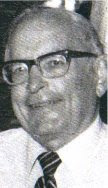
Retired in 1998 after a 50-year career of editing and publishing Colorado small-town weekly newspapers. He served as president of the Colorado Press Association in 1981 and was awarded an honorary lifetime membership.