LETTERS THAT NEVER GET PRINTED
To The Denver Post:
A MODEST PROPOSAL
Re: “Rentals take a vacation from tax,” The Denver Post, 2/12/2010. Instead of dogging the homeowners in these plush ski resorts for a piddling bed-tax, why don’t the local governments team up with the Colorado Legislature and go after the ski companies--where the money is--for more revenue? In almost every case these businesses are using public domain (land owned by all of us and nontaxable) for private gain.
The co-opting of public property for private enrichment with little or no reimbursement to the taxpayers is an issue that needs to be examined much more closely. Any bets?
Thursday, February 18, 2010


Sunday, February 14, 2010
SCOPING THE FOURTH ESTATE
“Recipe for real reform,” a column by Jonathan Turley, a professor of law at George Washington University who always has a lot to say about politics, appeared in the Feb. 13 edition of the Longmont Times-Call. Let’s take a look at some of his “reforms,” most of which incidentally are not new.
Turley advocates removing barriers to third parties and wants a federally funded electronic forum to post their positions and materials (what’s wrong with using the Internet?), and thinks they all should be entitled to federally funded debates (a dozen candidates on stage?). Well, whenever the government injects money into the electoral system the partisans in Congress will prevail. The government should stay out of elections; it’s already in too deep through McCain-Feingold.
Turley says one of the reasons incumbents are returned to power is that the voters have little choice in the general election. He suggests a constitutional amendment to put the two top vote-getters in a primary on the general election ballot instead of just one. Which I think would only make it easier for the officeholder because the opposing votes would be split.
He wants to abolish the Electoral College. This argument is so old I’m surprised that anyone who is dedicated to the rights of the minority, as I’m sure Turley is, would keep bringing it up. Without the EC, scarcely populated states such as Colorado, Wyoming and Montana would be afterthoughts.
He also says that if no presidential candidate receives more than 50 percent of the vote, there should be a runoff of the two top vote-getters like, get this, “in most other nations.” What that will prove, I do not know. We need more voters. People who don’t vote get the kind of government they deserve.
To enact all this reform, Turley wants the people to call for their own Constitutional convention. A very difficult process at best and a dangerous one because God only knows what the political opportunists will do with our Constitution once they get their busy little fingers on it.
In the name of reform, I think Turley should stick with teaching law.
THE LONGMONT LEDGER, a freebie published by the Boulder Daily Camera, is currently flooding the Longmont market. Talk about greed. Founded by the Paddock family of Boulder in 1884, the Camera was sold in 1969 to the Ridder Company. In 1977, Ridder merged into Knight-Ridder; then, in 1997, K-R traded it to E. W. Scripps for two west-coast dailies. Scripps, enjoying a nice stream of revenue from its Home & Garden channel grew weary of subsidizing its newspaper operations, so the Rocky Mountain News died and Dean Singleton’s MediaNews group (the second largest print-media chain in the U.S.) absorbed the Camera and the Broomfield Enterprise. The Camera’s massive press was dismantled, and the Camera Building, long a landmark in downtown Boulder, was placed on the market but remains unsold. In the freebie’s “In Brief” column of Feb. 14 titled “City settles open meetings suit with newspaper,” it is implied that the citizens of Longmont overturned the LifeBridge Church decision at the ballot box when in fact that proposition has never been brought to a direct public vote.
As a source for Longmont information, I prefer the local Times-Call. Incidentally, editor Clay Evans of the Ledger lives in Longmont and once worked at the Lehman family's T-C.
“Recipe for real reform,” a column by Jonathan Turley, a professor of law at George Washington University who always has a lot to say about politics, appeared in the Feb. 13 edition of the Longmont Times-Call. Let’s take a look at some of his “reforms,” most of which incidentally are not new.
Turley advocates removing barriers to third parties and wants a federally funded electronic forum to post their positions and materials (what’s wrong with using the Internet?), and thinks they all should be entitled to federally funded debates (a dozen candidates on stage?). Well, whenever the government injects money into the electoral system the partisans in Congress will prevail. The government should stay out of elections; it’s already in too deep through McCain-Feingold.
Turley says one of the reasons incumbents are returned to power is that the voters have little choice in the general election. He suggests a constitutional amendment to put the two top vote-getters in a primary on the general election ballot instead of just one. Which I think would only make it easier for the officeholder because the opposing votes would be split.
He wants to abolish the Electoral College. This argument is so old I’m surprised that anyone who is dedicated to the rights of the minority, as I’m sure Turley is, would keep bringing it up. Without the EC, scarcely populated states such as Colorado, Wyoming and Montana would be afterthoughts.
He also says that if no presidential candidate receives more than 50 percent of the vote, there should be a runoff of the two top vote-getters like, get this, “in most other nations.” What that will prove, I do not know. We need more voters. People who don’t vote get the kind of government they deserve.
To enact all this reform, Turley wants the people to call for their own Constitutional convention. A very difficult process at best and a dangerous one because God only knows what the political opportunists will do with our Constitution once they get their busy little fingers on it.
In the name of reform, I think Turley should stick with teaching law.
THE LONGMONT LEDGER, a freebie published by the Boulder Daily Camera, is currently flooding the Longmont market. Talk about greed. Founded by the Paddock family of Boulder in 1884, the Camera was sold in 1969 to the Ridder Company. In 1977, Ridder merged into Knight-Ridder; then, in 1997, K-R traded it to E. W. Scripps for two west-coast dailies. Scripps, enjoying a nice stream of revenue from its Home & Garden channel grew weary of subsidizing its newspaper operations, so the Rocky Mountain News died and Dean Singleton’s MediaNews group (the second largest print-media chain in the U.S.) absorbed the Camera and the Broomfield Enterprise. The Camera’s massive press was dismantled, and the Camera Building, long a landmark in downtown Boulder, was placed on the market but remains unsold. In the freebie’s “In Brief” column of Feb. 14 titled “City settles open meetings suit with newspaper,” it is implied that the citizens of Longmont overturned the LifeBridge Church decision at the ballot box when in fact that proposition has never been brought to a direct public vote.
As a source for Longmont information, I prefer the local Times-Call. Incidentally, editor Clay Evans of the Ledger lives in Longmont and once worked at the Lehman family's T-C.
Wednesday, February 10, 2010
COMMENTS ON SOME OF THE CONTRIBUTIONS appearing on the Longmont Times-Call opinion page of Feb. 9, 2010:
First, Robert Ferenc’s letter, “Cameras don’t know who is driving,” regarding the proposed traffic cameras made a lot of sense. (Note: He and I exchanged barbs recently on another issue.) In addition to the several problems Ferenc cited in questioning the use of these devices, my objection is that the cameras installed for traffic enforcement purposes can easily be converted to provide the government with constant surveillance of the people. Unless we prefer to live in the world of “Big Brother,” I think we can do without the authorities watching our every move. And no, I’m not “for” allowing scofflaws behind the wheel to run amok.
In his letter “What do we get for health care?” Tony Umile recommends that it may be worthwhile to compare our health care with that of Europe, which, according to the data he presented, is superior to ours. He may be correct, but I have my doubts. For one thing, the countries involved usually collect heavy taxes from everybody to pay for it. So their free health care may not be so free after all. From personal experience, I’ve visited several different European countries and fortunately had no need to experience their health-care services. Unfortunately, I was once hospitalized in Cartagena, Colombia, and to get out of there and into a hospital in the United States was a most welcome experience for me. We’ve got to be careful in screwing around with our health-care system that we not end up destroying what we have.
And finally, I wish there was some way for Brad Jolly, education activist who authored the essay “School district still misrepresenting the basic facts” to serve as a full-time analyst of school finances and policies. I think it would be helpful to have a knowledgeable, outside person of his caliber monitoring and interpreting the issues, making recommendations if warranted, and publishing the findings on a regular basis. What do you think?
First, Robert Ferenc’s letter, “Cameras don’t know who is driving,” regarding the proposed traffic cameras made a lot of sense. (Note: He and I exchanged barbs recently on another issue.) In addition to the several problems Ferenc cited in questioning the use of these devices, my objection is that the cameras installed for traffic enforcement purposes can easily be converted to provide the government with constant surveillance of the people. Unless we prefer to live in the world of “Big Brother,” I think we can do without the authorities watching our every move. And no, I’m not “for” allowing scofflaws behind the wheel to run amok.
In his letter “What do we get for health care?” Tony Umile recommends that it may be worthwhile to compare our health care with that of Europe, which, according to the data he presented, is superior to ours. He may be correct, but I have my doubts. For one thing, the countries involved usually collect heavy taxes from everybody to pay for it. So their free health care may not be so free after all. From personal experience, I’ve visited several different European countries and fortunately had no need to experience their health-care services. Unfortunately, I was once hospitalized in Cartagena, Colombia, and to get out of there and into a hospital in the United States was a most welcome experience for me. We’ve got to be careful in screwing around with our health-care system that we not end up destroying what we have.
And finally, I wish there was some way for Brad Jolly, education activist who authored the essay “School district still misrepresenting the basic facts” to serve as a full-time analyst of school finances and policies. I think it would be helpful to have a knowledgeable, outside person of his caliber monitoring and interpreting the issues, making recommendations if warranted, and publishing the findings on a regular basis. What do you think?
Sunday, January 17, 2010
(Copy of letter e-mailed to both publications.)
LIBERAL PANDERING
The way The Denver Post and Longmont Times-Call are promoting their favorite liberal politicians lately, giving them glowing publicity of the kind and extent that no conservative could ever hope for, I’m wondering what sort of ethical standard for journalistic fairness today’s newspapers follow.
The Post’s display of ecstasy over Mayor Hickenlooper’s gubernatorial candidacy defies description. The syrup oozed all over the front page and spilled over inside. It’s as if we had never seen nor heard of this fellow.
Under the headline “Call to order” (1-14-10 Times-Call), readers were exposed to similar fawning involving another liberal, this time it was State Senator Brandon Shaffer of Longmont, whose photo graced half the newspaper’s front page and the minutia-filled story with more photos went on and on to occupy nearly a whole page inside. And this is news?
While it is an honor for Shaffer to have been selected by his peer group to lead the Colorado Senate, it is not the first time that a Longmont resident was chosen by his fellow senators to serve in a leadership role.
Back before Art. IV of the Colorado Constitution was amended in 1974, the lieutenant governor automatically served as president of the senate. From 1877 to 1974, the senate leader, elected by members, bore the title of senate president pro tem. At the fourth legislative session in 1883, Rienzi Streeter of Longmont was selected by members to serve as leader (president pro tem) of the Colorado Senate. Streeter also had the distinction of serving as speaker of the house during the second session, in 1879. I doubt that he received 1 1/2 pages of glowing publicity.
I may be an old-fashioned journalist, but I still believe that political favoritism belongs on the opinion pages, not in news reports.
P.
LIBERAL PANDERING
The way The Denver Post and Longmont Times-Call are promoting their favorite liberal politicians lately, giving them glowing publicity of the kind and extent that no conservative could ever hope for, I’m wondering what sort of ethical standard for journalistic fairness today’s newspapers follow.
The Post’s display of ecstasy over Mayor Hickenlooper’s gubernatorial candidacy defies description. The syrup oozed all over the front page and spilled over inside. It’s as if we had never seen nor heard of this fellow.
Under the headline “Call to order” (1-14-10 Times-Call), readers were exposed to similar fawning involving another liberal, this time it was State Senator Brandon Shaffer of Longmont, whose photo graced half the newspaper’s front page and the minutia-filled story with more photos went on and on to occupy nearly a whole page inside. And this is news?
While it is an honor for Shaffer to have been selected by his peer group to lead the Colorado Senate, it is not the first time that a Longmont resident was chosen by his fellow senators to serve in a leadership role.
Back before Art. IV of the Colorado Constitution was amended in 1974, the lieutenant governor automatically served as president of the senate. From 1877 to 1974, the senate leader, elected by members, bore the title of senate president pro tem. At the fourth legislative session in 1883, Rienzi Streeter of Longmont was selected by members to serve as leader (president pro tem) of the Colorado Senate. Streeter also had the distinction of serving as speaker of the house during the second session, in 1879. I doubt that he received 1 1/2 pages of glowing publicity.
I may be an old-fashioned journalist, but I still believe that political favoritism belongs on the opinion pages, not in news reports.
P.
Thursday, December 31, 2009
UNBRIDLED SECRECY POISONS GOOD GOVERNMENT
To the detriment of the public, transparency of government in Colorado is taking a pounding from court interpretations that continue to weaken key elements of the state’s Open Meetings and Open Records laws. Two current examples:
Based on fairly clear-cut evidence, the Longmont Times-Call filed a complaint in Boulder District Court in June alleging that the local city council violated the executive-session provision of the Open Meetings law (i.e., no public policy can be formed or straw votes taken behind closed doors). Five months later, in November, the judge ruled that since the executive session was announced as an attorney-client briefing wherein no tape recordings or written records were required, there was nothing to review and sent the case back to the newspaper, leaving the alleged violation unaddressed.
Obviously, this half-baked ruling invites abuse of the OML by opportunistic public officials who can now hide behind the anonymity and confidentiality of the executive session at will by simply calling it an “attorney-client briefing.”
The Open Records law: In an effort to get some idea of with whom and what our governor might be discussing in the calls he makes when conducting the people’s business on his private telephone, The Denver Post has been rebuffed by the Colorado Court of Appeals which won’t allow the public watchdog to see the records.
Another precedent-setting court decision that, if allowed to stand, will encourage public officials at all levels in Colorado to govern via their private phones and the public be damned.
Secrecy is making serious inroads into our governmental systems; not good news if you believe in freedom.
To the detriment of the public, transparency of government in Colorado is taking a pounding from court interpretations that continue to weaken key elements of the state’s Open Meetings and Open Records laws. Two current examples:
Based on fairly clear-cut evidence, the Longmont Times-Call filed a complaint in Boulder District Court in June alleging that the local city council violated the executive-session provision of the Open Meetings law (i.e., no public policy can be formed or straw votes taken behind closed doors). Five months later, in November, the judge ruled that since the executive session was announced as an attorney-client briefing wherein no tape recordings or written records were required, there was nothing to review and sent the case back to the newspaper, leaving the alleged violation unaddressed.
Obviously, this half-baked ruling invites abuse of the OML by opportunistic public officials who can now hide behind the anonymity and confidentiality of the executive session at will by simply calling it an “attorney-client briefing.”
The Open Records law: In an effort to get some idea of with whom and what our governor might be discussing in the calls he makes when conducting the people’s business on his private telephone, The Denver Post has been rebuffed by the Colorado Court of Appeals which won’t allow the public watchdog to see the records.
Another precedent-setting court decision that, if allowed to stand, will encourage public officials at all levels in Colorado to govern via their private phones and the public be damned.
Secrecy is making serious inroads into our governmental systems; not good news if you believe in freedom.
Tuesday, December 29, 2009
JOURNALISTS MAY BE SELF-DESTRUCTING
Regarding the alleged need for Congress to enact a federal shield law to protect reporters and their sources, as a retired longtime newsperson I must say beware -- for whatever privilege the Washington politicians bestow, they can easily regulate, license, amend, use for ransom, or snatch it away. Requesting the government to protect a crucial reportorial practice that the watchdog itself indicates it is no longer willing to defend on principle by going to jail if necessary, does not speak well of a fearless free-press and sends the wrong message to the public.
It may well be declared nostalgic, but we in and of the press cannot let the basic idea of freedom of the press die. Freedom of religion, speech and the press are specifically cited in the First Amendment as being protected from government interference. There is nothing in there that says the judicial branch and its occasionally overzealous judges and prosecutors or the legislative or executive branches are free to override this profound protection. The legal profession has no similar exemption. Yet, as we all know, lawyers are free to routinely enjoy impenetrable attorney-client secrecy as they go about their work without requesting a shield law.
Colorado is generally regarded in the news business as having a good shield law and since it’s close to home, there is less danger of it being tweaked on a politically partisan basis. But unlike the simple and direct language of the First Amendment, Colorado’s shield law typically includes caveats, one of which is that a newsperson does not have to disclose a source “unless the information cannot reasonably be obtained by any other means.” New York Times reporter Judith Miller of Libby-trial fame arguably could not have been saved from jail under Colorado’s shield law.
This is not to argue that freedom of the press is absolute. Rather it is a call for media-types to concentrate their time, energy and money toward defending the First Amendment, and doing everything else they can within their own organizations such as publicizing its value to the public and, most important, working to keep from abusing its privileges themselves.
The only answer for the newspersons who believe they must have a shield law would be, I suppose, to amend the U.S. Constitution and embed their own version. But, as the noted contemporary journalist John Seigenthaler is quoted, “The people are not on our side,” indicating that the press stands to come up short even if a Constitutional Convention were to occur, which in itself is not a likely event.
So here is where America’s journalists are, back to the only protection that counts: the First Amendment.
P.
Regarding the alleged need for Congress to enact a federal shield law to protect reporters and their sources, as a retired longtime newsperson I must say beware -- for whatever privilege the Washington politicians bestow, they can easily regulate, license, amend, use for ransom, or snatch it away. Requesting the government to protect a crucial reportorial practice that the watchdog itself indicates it is no longer willing to defend on principle by going to jail if necessary, does not speak well of a fearless free-press and sends the wrong message to the public.
It may well be declared nostalgic, but we in and of the press cannot let the basic idea of freedom of the press die. Freedom of religion, speech and the press are specifically cited in the First Amendment as being protected from government interference. There is nothing in there that says the judicial branch and its occasionally overzealous judges and prosecutors or the legislative or executive branches are free to override this profound protection. The legal profession has no similar exemption. Yet, as we all know, lawyers are free to routinely enjoy impenetrable attorney-client secrecy as they go about their work without requesting a shield law.
Colorado is generally regarded in the news business as having a good shield law and since it’s close to home, there is less danger of it being tweaked on a politically partisan basis. But unlike the simple and direct language of the First Amendment, Colorado’s shield law typically includes caveats, one of which is that a newsperson does not have to disclose a source “unless the information cannot reasonably be obtained by any other means.” New York Times reporter Judith Miller of Libby-trial fame arguably could not have been saved from jail under Colorado’s shield law.
This is not to argue that freedom of the press is absolute. Rather it is a call for media-types to concentrate their time, energy and money toward defending the First Amendment, and doing everything else they can within their own organizations such as publicizing its value to the public and, most important, working to keep from abusing its privileges themselves.
The only answer for the newspersons who believe they must have a shield law would be, I suppose, to amend the U.S. Constitution and embed their own version. But, as the noted contemporary journalist John Seigenthaler is quoted, “The people are not on our side,” indicating that the press stands to come up short even if a Constitutional Convention were to occur, which in itself is not a likely event.
So here is where America’s journalists are, back to the only protection that counts: the First Amendment.
P.
Tuesday, December 15, 2009
BAL SALVAGES SOME EARLIER PRINTING EQUIPMENT
Members of the Book Arts League deserve kudos for their efforts to establish a collection of outmoded letterpress printing equipment at their home base, the historic Ewing Farm on north 95th street in Lafayette.
BAL held an open house Dec. 5 at the Farm, and what a surprise it was for me to see a hand-fed “snapper” platen press in operation again, after having fed one by the hour upon learning the trade as a printer’s devil over 60 years ago. Unlike the motor-driven commercial presses of the past, the “snapper” on display is hand-powered—probably by choice for safety reasons. But that has no effect on the quality of the printed product it churns out, as evidenced by the group’s nice self-produced souvenir bookmark.
Noticeably missing from this collection is the iron monster that revolutionized the printing industry, the Linotype machine. Rarely found and still in use at only two Colorado newspapers, the Crescent at Saguache and the South Y-W Star at Kirk, surely BAL could find one somewhere to display, if it so desires.
BAL and volunteers have already come a long way in establishing an interesting collection at an equally interesting historic farm, both well worth the visit.
P.
Members of the Book Arts League deserve kudos for their efforts to establish a collection of outmoded letterpress printing equipment at their home base, the historic Ewing Farm on north 95th street in Lafayette.
BAL held an open house Dec. 5 at the Farm, and what a surprise it was for me to see a hand-fed “snapper” platen press in operation again, after having fed one by the hour upon learning the trade as a printer’s devil over 60 years ago. Unlike the motor-driven commercial presses of the past, the “snapper” on display is hand-powered—probably by choice for safety reasons. But that has no effect on the quality of the printed product it churns out, as evidenced by the group’s nice self-produced souvenir bookmark.
Noticeably missing from this collection is the iron monster that revolutionized the printing industry, the Linotype machine. Rarely found and still in use at only two Colorado newspapers, the Crescent at Saguache and the South Y-W Star at Kirk, surely BAL could find one somewhere to display, if it so desires.
BAL and volunteers have already come a long way in establishing an interesting collection at an equally interesting historic farm, both well worth the visit.
P.
Wednesday, December 09, 2009
COMMISSIONERS SET LEGISLATIVE AGENDA FOR FELLOW LIBERALS
According to the Longmont Times-Call in an article filed by reporter John Fryer, the Boulder County Commissioners have compiled a wish list for the Colorado Legislature’s 2010 session. The itemized list follows with my comments added in italics.
• Criminal sentencing reforms that promote drug-treatment courts and alternative treatments.
Code words for legalization.
• Allowing local governments to post certain legal notices online rather than requiring them to be published in newspapers.
If they truly believed in transparency, they would publish and post too.
• Limiting the interest rates and other fees charged with “payday” loans, as well as limiting the number of consecutive loans such lenders can make to a consumer.
The county commissioners should be examining their own list of unfair fees.
• Allowing counties and statutory cities and towns — those without home-rule charters — to enact ordinances that could require existing residential and commercial buildings to meet minimum energy-performance standards.
Who’s going to pay for all of this? Oh, see next item.
• Allowing counties and municipalities to impose fees that building owners would be allowed to pay in lieu of meeting “green” building standards for their structures, if those owners cannot make required energy-conservation improvements.
Another tax increase masquerading as a fee.
• Allowing state and local governments to collect sales taxes on items purchased over the Internet.
Our three commissioners might explain why their fellow liberals in Congress and the White House refuse to act on this.
• Providing a “pay-as-you-go” auto insurance option for Colorado vehicle owners, tying insurance premiums to the number of miles driven.
More miles, higher premiums -- just the thing for those rural residents.
• Legislation or administrative changes to improve eligible Coloradans’ access to Medicaid and Children’s Health Plan Plus programs.
No use thinking about this until Congress gets through playing around with healthcare reform.
• Giving counties authority to impose a transportation maintenance fee to help pay for local roads’ maintenance needs.
Yet another tax increase masked as a fee so that even more money can be transferred out of the R&B fund. The people are catching on.
According to the Longmont Times-Call in an article filed by reporter John Fryer, the Boulder County Commissioners have compiled a wish list for the Colorado Legislature’s 2010 session. The itemized list follows with my comments added in italics.
• Criminal sentencing reforms that promote drug-treatment courts and alternative treatments.
Code words for legalization.
• Allowing local governments to post certain legal notices online rather than requiring them to be published in newspapers.
If they truly believed in transparency, they would publish and post too.
• Limiting the interest rates and other fees charged with “payday” loans, as well as limiting the number of consecutive loans such lenders can make to a consumer.
The county commissioners should be examining their own list of unfair fees.
• Allowing counties and statutory cities and towns — those without home-rule charters — to enact ordinances that could require existing residential and commercial buildings to meet minimum energy-performance standards.
Who’s going to pay for all of this? Oh, see next item.
• Allowing counties and municipalities to impose fees that building owners would be allowed to pay in lieu of meeting “green” building standards for their structures, if those owners cannot make required energy-conservation improvements.
Another tax increase masquerading as a fee.
• Allowing state and local governments to collect sales taxes on items purchased over the Internet.
Our three commissioners might explain why their fellow liberals in Congress and the White House refuse to act on this.
• Providing a “pay-as-you-go” auto insurance option for Colorado vehicle owners, tying insurance premiums to the number of miles driven.
More miles, higher premiums -- just the thing for those rural residents.
• Legislation or administrative changes to improve eligible Coloradans’ access to Medicaid and Children’s Health Plan Plus programs.
No use thinking about this until Congress gets through playing around with healthcare reform.
• Giving counties authority to impose a transportation maintenance fee to help pay for local roads’ maintenance needs.
Yet another tax increase masked as a fee so that even more money can be transferred out of the R&B fund. The people are catching on.
Sunday, November 29, 2009
PUBLIC'S RIGHT TO KNOW SUFFERS SETBACK
Preamble to the Colorado Open Meetings law: It is declared to be a matter of statewide concern and the policy of this state that the formation of public policy is public business and may not be conducted in secret.
I’m afraid that these words were taken in vain last week in Boulder County District Court where Judge Roxanne Bailin failed to rule on the crux of a complaint lodged by the Longmont Times-Call and reporter Rachel Carter that a substantial discussion of nonexempt topics and adoption of public policy had unlawfully occurred during a June 23 executive session of the Longmont City Council which, if true, would render any action therein null and void.
The local newspaper, defending the public’s right to know, offered evidence that indicated the council indeed had taken a “straw vote” behind closed doors, was led to believe the session was recorded, and asked the court to review the tapes for verification. But there were no tapes, which is permissible under the attorney-client exemption. City attorney Eugene Mei nonetheless fought to prevent release of the “audio recording” of the June 23 session and referred to it twice later in communications with the court. Knowing all along there was no recording, Mei finally presented to the court a tape that had nothing on it to review except the required pre-secret meeting announcement. Instead of sanctioning the city attorney for playing games, Bailin merely called the city’s position “mystifying” and left the allegation of forming public policy in secrecy hanging in the wind.
Attorney-client communications behind closed doors are exempt; forming public policy is not. Unfortunately this half-baked outcome opens the door wide for all local governments in the state to now declare every executive session attorney-client privileged, with policy-making off limits to the press and public.
Preamble to the Colorado Open Meetings law: It is declared to be a matter of statewide concern and the policy of this state that the formation of public policy is public business and may not be conducted in secret.
I’m afraid that these words were taken in vain last week in Boulder County District Court where Judge Roxanne Bailin failed to rule on the crux of a complaint lodged by the Longmont Times-Call and reporter Rachel Carter that a substantial discussion of nonexempt topics and adoption of public policy had unlawfully occurred during a June 23 executive session of the Longmont City Council which, if true, would render any action therein null and void.
The local newspaper, defending the public’s right to know, offered evidence that indicated the council indeed had taken a “straw vote” behind closed doors, was led to believe the session was recorded, and asked the court to review the tapes for verification. But there were no tapes, which is permissible under the attorney-client exemption. City attorney Eugene Mei nonetheless fought to prevent release of the “audio recording” of the June 23 session and referred to it twice later in communications with the court. Knowing all along there was no recording, Mei finally presented to the court a tape that had nothing on it to review except the required pre-secret meeting announcement. Instead of sanctioning the city attorney for playing games, Bailin merely called the city’s position “mystifying” and left the allegation of forming public policy in secrecy hanging in the wind.
Attorney-client communications behind closed doors are exempt; forming public policy is not. Unfortunately this half-baked outcome opens the door wide for all local governments in the state to now declare every executive session attorney-client privileged, with policy-making off limits to the press and public.
CITY BUDGET FOR LEGAL SERVICES SPIRALS UPWARD
Recession-induced revenue problems have forced the Longmont City Council, like other fiscally responsible governments across the nation, to trim spending and allow for only tiny increases, if any, in the 2010 budget. In Longmont City Hall, this tightening of the purse strings seems to have hit almost every department except one: that of the City Attorney, which will get a whopping 11 percent increase of $90,797 next year, according to city budget documents.
The total budget for the city’s legal department in 2008, under attorney Clay Douglas, was $813,271. In 2009, it was even a tad less, at $812,166. And, yes, Douglas was busy with litigation too.
The 2010 budget for this department, under the direction of newly hired attorney Eugene Mei, has skyrocketed to $902,963.
Details in the city’s 2010 budget document show all of the $90,797 increase is allocated to “Professional and Contracted Services.” This indicates that despite the fact that the city already hires a legal staff of five (city attorney, deputy city attorney, plus three assistant city attorneys), the city plans to allow Mei to step up the hiring of outside counsel in 2010. What for, other than to harass a church’s development project, is a relevant question from taxpayers whose budgets are also thin.
An example of bringing in expensive “outside counsel” when there appeared no pressing reason to do so, was the hiring of an attorney to oversee the Longmont Fair Campaign Practices Act hearings. Surely, someone from the City Attorney’s department should have been able, and available, to offer advice to the city election committee, if need be.
If Longmont is going to become dependant on hiring outside counsel, as seems to be the trend, then the city might consider outsourcing its entire legal department services, as other cities have done, by inviting law firms to bid for the contract and appointing the winner.
Recession-induced revenue problems have forced the Longmont City Council, like other fiscally responsible governments across the nation, to trim spending and allow for only tiny increases, if any, in the 2010 budget. In Longmont City Hall, this tightening of the purse strings seems to have hit almost every department except one: that of the City Attorney, which will get a whopping 11 percent increase of $90,797 next year, according to city budget documents.
The total budget for the city’s legal department in 2008, under attorney Clay Douglas, was $813,271. In 2009, it was even a tad less, at $812,166. And, yes, Douglas was busy with litigation too.
The 2010 budget for this department, under the direction of newly hired attorney Eugene Mei, has skyrocketed to $902,963.
Details in the city’s 2010 budget document show all of the $90,797 increase is allocated to “Professional and Contracted Services.” This indicates that despite the fact that the city already hires a legal staff of five (city attorney, deputy city attorney, plus three assistant city attorneys), the city plans to allow Mei to step up the hiring of outside counsel in 2010. What for, other than to harass a church’s development project, is a relevant question from taxpayers whose budgets are also thin.
An example of bringing in expensive “outside counsel” when there appeared no pressing reason to do so, was the hiring of an attorney to oversee the Longmont Fair Campaign Practices Act hearings. Surely, someone from the City Attorney’s department should have been able, and available, to offer advice to the city election committee, if need be.
If Longmont is going to become dependant on hiring outside counsel, as seems to be the trend, then the city might consider outsourcing its entire legal department services, as other cities have done, by inviting law firms to bid for the contract and appointing the winner.
Monday, October 26, 2009
LONGMONT'S ELECTION COMMITTEE MAY BE ON SHAKY GROUND
The people of Longmont changed their form of city government from statutory to home rule in 1961. Under Article XX of the Colorado Constitution, which authorizes home rule in local government, they also wrote and adopted the Longmont Municipal Charter.
The Longmont Municipal Code derives most of its power and authority from the Longmont Municipal Charter.
Because of their constitutional quality, home-rule charters are intentionally hard to amend. Consequently, in order for any material to be added or subtracted, or any change be made to the Longmont City Charter, all such proposals must go to a vote of the people. For council to merely pass an ordinance is insufficient.
Which brings us to the forming of the city’s new Election Committee. The City Council may have erred in expanding this committee to seven members from three without first amending the charter, thus conceivably rendering the committee’s work moot. (And please, this may seem trivial unless we’re interested in the Rule of Law. Also, this is no reflection on the individual committee members.) Here’s what the Longmont Municipal Charter says:
2.2 REGISTRATIONS, JUDGES, CLERKS AND ELECTION COMMISSION
The Council shall by ordinance establish the method for the registration of electors; the qualifications and compensation of election judges and clerks, and the boundaries of election precincts. The Council may by ordinance establish an election commission consisting of the city clerk as chairman; and two additional members to be appointed by the Council with such powers, duties, terms and qualifications as provided by ordinance.
The people of Longmont changed their form of city government from statutory to home rule in 1961. Under Article XX of the Colorado Constitution, which authorizes home rule in local government, they also wrote and adopted the Longmont Municipal Charter.
The Longmont Municipal Code derives most of its power and authority from the Longmont Municipal Charter.
Because of their constitutional quality, home-rule charters are intentionally hard to amend. Consequently, in order for any material to be added or subtracted, or any change be made to the Longmont City Charter, all such proposals must go to a vote of the people. For council to merely pass an ordinance is insufficient.
Which brings us to the forming of the city’s new Election Committee. The City Council may have erred in expanding this committee to seven members from three without first amending the charter, thus conceivably rendering the committee’s work moot. (And please, this may seem trivial unless we’re interested in the Rule of Law. Also, this is no reflection on the individual committee members.) Here’s what the Longmont Municipal Charter says:
2.2 REGISTRATIONS, JUDGES, CLERKS AND ELECTION COMMISSION
The Council shall by ordinance establish the method for the registration of electors; the qualifications and compensation of election judges and clerks, and the boundaries of election precincts. The Council may by ordinance establish an election commission consisting of the city clerk as chairman; and two additional members to be appointed by the Council with such powers, duties, terms and qualifications as provided by ordinance.
Friday, October 23, 2009
ARE THE GUNS OF THE BIG-CITY PRESS AIMED AT LONGMONT?
Judging from the outbreak of newspaper racks planted around Longmont by his Denver News Agency to accommodate the remade version of their failed freebie YourHub.com, henceforth to be known as the Longmont Ledger, Denver newspaper magnate Dean Singleton clearly has his eye on the Longmont market. Singleton owns or controls at least 60 dailies and 97 non-dailies and adding another one probably wouldn't hurt. Operating through DNA’s Daily Camera of Boulder, Longmont resident Clay Evans of that newspaper will be in charge of the reconstituted Longmont Ledger.
Some speculation has risen as to the DNA’s right to use the title of a longtime Longmont newspaper of the same name, which ceased publication years ago, the Longmont Ledger. It's been my experience that there would probably be no barrier to reusing the title unless some publisher of the Ledger at some time or other had registered the name as a trademark or printed a copyright symbol in the masthead. Either of those acts might complicate things.
A brief rundown on some of Longmont’s newspaper history as gleaned from the extensive works of the late Walter Stewart, who was a professor of journalism at UNC, and his wife Elma St. John Stewart:
Longmont Times founded in 1871 by Elmer Beckwith.
Longmont Ledger founded in 1879 by Charles Boynton and J.J. Jilson; name changed to Boulder County Commercial Ledger in 1970.
Longmont Call founded in 1898 by George W. Johnson.
Longmont Times and Longmont Call merged in 1931 to become the Longmont Times-Call. The Lehman family became owners in 1957.
Longmont Scene founded in 1970 by Agnes Roberts bought and merged the Boulder County Commercial Ledger in 1971.
Longmont Scene suspended publication in 1978.
Judging from the outbreak of newspaper racks planted around Longmont by his Denver News Agency to accommodate the remade version of their failed freebie YourHub.com, henceforth to be known as the Longmont Ledger, Denver newspaper magnate Dean Singleton clearly has his eye on the Longmont market. Singleton owns or controls at least 60 dailies and 97 non-dailies and adding another one probably wouldn't hurt. Operating through DNA’s Daily Camera of Boulder, Longmont resident Clay Evans of that newspaper will be in charge of the reconstituted Longmont Ledger.
Some speculation has risen as to the DNA’s right to use the title of a longtime Longmont newspaper of the same name, which ceased publication years ago, the Longmont Ledger. It's been my experience that there would probably be no barrier to reusing the title unless some publisher of the Ledger at some time or other had registered the name as a trademark or printed a copyright symbol in the masthead. Either of those acts might complicate things.
A brief rundown on some of Longmont’s newspaper history as gleaned from the extensive works of the late Walter Stewart, who was a professor of journalism at UNC, and his wife Elma St. John Stewart:
Longmont Times founded in 1871 by Elmer Beckwith.
Longmont Ledger founded in 1879 by Charles Boynton and J.J. Jilson; name changed to Boulder County Commercial Ledger in 1970.
Longmont Call founded in 1898 by George W. Johnson.
Longmont Times and Longmont Call merged in 1931 to become the Longmont Times-Call. The Lehman family became owners in 1957.
Longmont Scene founded in 1970 by Agnes Roberts bought and merged the Boulder County Commercial Ledger in 1971.
Longmont Scene suspended publication in 1978.
Thursday, October 15, 2009
A NOVEL WAY TO GET EVEN WITH YOUR POLITICAL ENEMIES
Politics in Longmont are getting more political by the minute. Latest example is the work of the City Council’s handpicked Election Committee, which met for the first time on Oct. 12 to determine which complaints out of several filed by a disgruntled councilwoman against her political enemies were worthy of pursuit. They accepted two for further action. Unfortunately, by the committee’s lawyer telling the committee members--who at the next step will serve as both judge and jury--that they should assume “that all facts stated in the written complaints are true,” this quasi-judicial process takes on the markings of a kangaroo court. Bolstering that assumption are two more items: the committee’s willingness to accept amendments to complaints already filed (where do the accusations end?); and the possible prejudice of an Election Committee member who intimated that she may have already made up her mind about one of the complaints, a complicated political issue involving a poll, saying the complainant’s name was used “as many as five times.” Keep in mind that the Longmont citizens who are defendants in this process are presumed innocent until proven guilty. The complainant promises to keep using this special committee to file even more charges. Who’s the next victim of Longmont’s repressive Fair Campaign Practices ordinance?
Politics in Longmont are getting more political by the minute. Latest example is the work of the City Council’s handpicked Election Committee, which met for the first time on Oct. 12 to determine which complaints out of several filed by a disgruntled councilwoman against her political enemies were worthy of pursuit. They accepted two for further action. Unfortunately, by the committee’s lawyer telling the committee members--who at the next step will serve as both judge and jury--that they should assume “that all facts stated in the written complaints are true,” this quasi-judicial process takes on the markings of a kangaroo court. Bolstering that assumption are two more items: the committee’s willingness to accept amendments to complaints already filed (where do the accusations end?); and the possible prejudice of an Election Committee member who intimated that she may have already made up her mind about one of the complaints, a complicated political issue involving a poll, saying the complainant’s name was used “as many as five times.” Keep in mind that the Longmont citizens who are defendants in this process are presumed innocent until proven guilty. The complainant promises to keep using this special committee to file even more charges. Who’s the next victim of Longmont’s repressive Fair Campaign Practices ordinance?
Thursday, September 24, 2009
ROBBING PETER TO PAY PAUL
One way to balance the city budget amidst a recession is to switch the funds around? According to the 9/20/09 Times-Call, Longmont city officials are pursuing a plan to spend 8.5 million dollars to add to the city’s open space inventory, but upon going to the cupboard old Mother Hubbard found not nearly enough cash in the open-space jar to pull off the deal. Only about half enough, the report said. So the city is thinking of tapping three allied funds to help make up the difference.
The city water fund
The city streets fund
The city storm drainage fund
Funding open space purchases out of the water fund? What a marvelous source of revenue with which to buy land – just raise everybody’s water bill over and over and watch the money roll in.
And the streets fund? Once the bleeding starts, it will never stop.
Same for the storm drainage fund, which may be even more sensitive because it involves voter-approved bonds. Was there language in the ballot proposal that would allow this fund to be used for land purchases beyond the minimum amount needed for completing the projects?
It's not good business to be raiding funds in non-emergencies.
One way to balance the city budget amidst a recession is to switch the funds around? According to the 9/20/09 Times-Call, Longmont city officials are pursuing a plan to spend 8.5 million dollars to add to the city’s open space inventory, but upon going to the cupboard old Mother Hubbard found not nearly enough cash in the open-space jar to pull off the deal. Only about half enough, the report said. So the city is thinking of tapping three allied funds to help make up the difference.
The city water fund
The city streets fund
The city storm drainage fund
Funding open space purchases out of the water fund? What a marvelous source of revenue with which to buy land – just raise everybody’s water bill over and over and watch the money roll in.
And the streets fund? Once the bleeding starts, it will never stop.
Same for the storm drainage fund, which may be even more sensitive because it involves voter-approved bonds. Was there language in the ballot proposal that would allow this fund to be used for land purchases beyond the minimum amount needed for completing the projects?
It's not good business to be raiding funds in non-emergencies.
Tuesday, September 15, 2009
Letter to editor
Longmont-Times-Call, 9/15/09
CONDUCT BUSINESS IN PUBLIC
I don’t know about you, but I don’t have much confidence in public officials who duck behind closed doors whenever a sensitive issue arises. First a disclosure: As a longtime newspaper publisher now retired, I have served on both sides of this issue. I’m anti-secrecy; only rarely should it be necessary. While serving years ago as mayor in a different Colorado town, I forbade executive sessions. Despite land deals, personnel issues, lawsuits and attorney-client briefings, we functioned just fine. (SENTENCE REDACTED by Times-Call opinion pages editor: The same openness seems to be working in Boulder where secrecy is banned by the city charter.)
Operating apparently on the assumption that what we constituents don’t know won’t hurt us, the Longmont council’s use of “executive sessions” has become so prevalent that the Times-Call (smoke ‘em out, I say) finally exercised its watchdog role by seeking a court review of the latest episode. A brief history shows that this move is warranted: During 2001, Longmont City Council met secretly four times; in 2006, six; in 2007, seven. But in 2008, the first year of the new majority, the number spiked to 16 and, up until June of this year, there were 11 executive sessions.
This appetite for secrecy also tells me that those in power who act this way are capable of doing everything else they can to control the flow of information, like (I hear) attempting to pull all of the city’s legal notices out of the community newspaper to punish it for what it does or does not write about them. Do you suppose the scheme is to kill the private messenger and then filter city-spawned information through a journal published by city staff? Is that partly what the council’s recently launched newspaper called “Longmont Life” is about?
Secrecy should be a lively item in the upcoming election.
P.
Longmont-Times-Call, 9/15/09
CONDUCT BUSINESS IN PUBLIC
I don’t know about you, but I don’t have much confidence in public officials who duck behind closed doors whenever a sensitive issue arises. First a disclosure: As a longtime newspaper publisher now retired, I have served on both sides of this issue. I’m anti-secrecy; only rarely should it be necessary. While serving years ago as mayor in a different Colorado town, I forbade executive sessions. Despite land deals, personnel issues, lawsuits and attorney-client briefings, we functioned just fine. (SENTENCE REDACTED by Times-Call opinion pages editor: The same openness seems to be working in Boulder where secrecy is banned by the city charter.)
Operating apparently on the assumption that what we constituents don’t know won’t hurt us, the Longmont council’s use of “executive sessions” has become so prevalent that the Times-Call (smoke ‘em out, I say) finally exercised its watchdog role by seeking a court review of the latest episode. A brief history shows that this move is warranted: During 2001, Longmont City Council met secretly four times; in 2006, six; in 2007, seven. But in 2008, the first year of the new majority, the number spiked to 16 and, up until June of this year, there were 11 executive sessions.
This appetite for secrecy also tells me that those in power who act this way are capable of doing everything else they can to control the flow of information, like (I hear) attempting to pull all of the city’s legal notices out of the community newspaper to punish it for what it does or does not write about them. Do you suppose the scheme is to kill the private messenger and then filter city-spawned information through a journal published by city staff? Is that partly what the council’s recently launched newspaper called “Longmont Life” is about?
Secrecy should be a lively item in the upcoming election.
P.
Thursday, July 30, 2009
Letter published 7/26/09
in the Boulder Daily Camera
LET THE STATE STATUTES WORK
Does the Town of Superior need home rule? Here are a few things that voters there might consider:
There's nothing under the statutory system that keeps people from participating in their local government, neither is there anything that prevents a municipality from determining its own destiny.
Getting out from under the protection of the state statutes is not always good for the ordinary citizen-taxpayer. For example, the state specifies a debt limit that home-rule municipalities can simply ignore.
Home rule opens the door to proposing many new taxes on the people, such as occupational taxes and privilege taxes that cannot even be considered in a statutory municipality.
Home rule tends to transfer power away from elected officials who can be held accountable directly by the voters into the hands of bureaucrats who, of course, are not elected.
One of the supposed virtues of home rule is that it allows a municipality to collect sales taxes directly instead of through the Colorado Department of Revenue. What is not mentioned, however, is the offsetting cost to local taxpayers of hiring additional personnel in city hall to take on this extra burden of collection and enforcement already performed by the state for free. To say the state makes mistakes but town halls do not, is being disingenuous.
As more people in towns across Colorado find out more about home rule, they are saying "no" and sticking with the state statutes. Recent examples: Erie, population 13,441, soundly rejected home rule not once but twice; Frederick, population 7,370, said no to home rule in 2005; Estes Park, population 5,921, is the latest community to reject home rule. And they all seem to be functioning quite nicely without it.
I have no dog in this fight. My only interest here is in good government.
P,
in the Boulder Daily Camera
LET THE STATE STATUTES WORK
Does the Town of Superior need home rule? Here are a few things that voters there might consider:
There's nothing under the statutory system that keeps people from participating in their local government, neither is there anything that prevents a municipality from determining its own destiny.
Getting out from under the protection of the state statutes is not always good for the ordinary citizen-taxpayer. For example, the state specifies a debt limit that home-rule municipalities can simply ignore.
Home rule opens the door to proposing many new taxes on the people, such as occupational taxes and privilege taxes that cannot even be considered in a statutory municipality.
Home rule tends to transfer power away from elected officials who can be held accountable directly by the voters into the hands of bureaucrats who, of course, are not elected.
One of the supposed virtues of home rule is that it allows a municipality to collect sales taxes directly instead of through the Colorado Department of Revenue. What is not mentioned, however, is the offsetting cost to local taxpayers of hiring additional personnel in city hall to take on this extra burden of collection and enforcement already performed by the state for free. To say the state makes mistakes but town halls do not, is being disingenuous.
As more people in towns across Colorado find out more about home rule, they are saying "no" and sticking with the state statutes. Recent examples: Erie, population 13,441, soundly rejected home rule not once but twice; Frederick, population 7,370, said no to home rule in 2005; Estes Park, population 5,921, is the latest community to reject home rule. And they all seem to be functioning quite nicely without it.
I have no dog in this fight. My only interest here is in good government.
P,
Friday, July 10, 2009
Letters submitted, not published.
To The Denver Post, 6/24/09:
A STRANGE SENSE OF ECONOMIC PRIORITIES
After giving the cold shoulder to the U.S. Military’s desire to expand its remote Pinon Canyon maneuver site to keep its significant contributions flowing into our state’s economy, most notably that of Colorado Springs, it’s shocking to see Colorado’s congressional delegation endorsing Christo and Jeanne-Claude’s “Over the River” project, which calls for draping plastic fabric over the Arkansas River for six miles between Canon City and Salida for a two-week show.
They make their millions selling duplicate miniatures of their projects.
This is the second “hanging” in our state for this artistic couple. Their first, in 1972 near Rifle, literally blew up when wind tore into the Valley Curtain’s 437 yards of plastic, and it had to be taken down prematurely. Over 200 tons of concrete were poured to anchor the curtain and most of it was left there, reportedly at the landowner’s request. Some legacy, eh?
There simply is no reason to further deface this beautiful segment of the Arkansas River canyon for private gain. Shame on our politicians.
Percy Conarroe
To The Denver Post, 6/24/09:
A STRANGE SENSE OF ECONOMIC PRIORITIES
After giving the cold shoulder to the U.S. Military’s desire to expand its remote Pinon Canyon maneuver site to keep its significant contributions flowing into our state’s economy, most notably that of Colorado Springs, it’s shocking to see Colorado’s congressional delegation endorsing Christo and Jeanne-Claude’s “Over the River” project, which calls for draping plastic fabric over the Arkansas River for six miles between Canon City and Salida for a two-week show.
They make their millions selling duplicate miniatures of their projects.
This is the second “hanging” in our state for this artistic couple. Their first, in 1972 near Rifle, literally blew up when wind tore into the Valley Curtain’s 437 yards of plastic, and it had to be taken down prematurely. Over 200 tons of concrete were poured to anchor the curtain and most of it was left there, reportedly at the landowner’s request. Some legacy, eh?
There simply is no reason to further deface this beautiful segment of the Arkansas River canyon for private gain. Shame on our politicians.
Percy Conarroe
Monday, July 06, 2009
Letter published in
the Longmont Times-Call, 7-06-09
ON CML AND COSTS TO MUNICIPALITIES
Another summer outing of the Colorado Municipal League is history. Eight Longmont officials attended this year’s event in Vail at a total cost of $5,840: Mayor Lange, three nights; Councilmember McCoy, four; City Attorneys, Mei, three, Rourke and Friedland, two; City Clerk Skitt, one; assistants Seader, four, and Hinz, one.
The city paid registration fees of $190 each except for Skitt, Seader and Hinz, who were presenters. All apparently qualified for the city’s $159 per night lodging allowance, meals of $46 per day, and those who drove their own vehicle could be reimbursed $.505 per mile for the 230 mi. roundtrip (230x$.505=$116.15).
On the upside, congratulations to Mayor Lange for being elected to the CML executive board. On the downside, I’m a longtime critic of this lobbying/partying organization because it lives almost entirely off the taxpayers through dues collected annually from 263 of Colorado’s 271 municipalities, this year totaling about $1,765,000. And for what? CML offers training for elected and appointed office personnel. In addition to this year’s dues, Longmont has apparently budgeted another $38,613 for that purpose.
Longmont’s population is listed at 82,904 with dues this year of $45,647 or 55 cents per capita. Denver’s population is listed at 530,223 with dues of $153,117 or only 26 cents per capita. How nice.
But it’s really the poor, small towns that I feel sorry for: places like Campo, Bonanza City, Haswell, and Hooper, that cannot even afford to hire a dogcatcher, yet each is expected to contribute upwards of $200 a year to the CML for dues.
In 1998, CML constructed its own deluxe headquarters buildng at 1144 Sherman Street in downtown Denver, close to the Golden Dome. But you won’t find CML paying ad valorem taxes to help fund the public education system – their property is tax exempt.
Two personal anecdotes that I omitted prior to submitting letter to meet T-C’s 300-word limit:
Item 1: As mayor of Simla, Colorado. in 1960, upon finding how CML was funded, I pulled the town’s membership; it eventually rejoined.
Item 2: As publisher of the Louisville Times, the newspaper told of how renown city administrator Leon Wurl (now deceased) got fired in midsummer of 1984, mostly because he was away attending a CML summer conference in the mountains and Louisville ran out of water when the main supply line broke.
P.
the Longmont Times-Call, 7-06-09
ON CML AND COSTS TO MUNICIPALITIES
Another summer outing of the Colorado Municipal League is history. Eight Longmont officials attended this year’s event in Vail at a total cost of $5,840: Mayor Lange, three nights; Councilmember McCoy, four; City Attorneys, Mei, three, Rourke and Friedland, two; City Clerk Skitt, one; assistants Seader, four, and Hinz, one.
The city paid registration fees of $190 each except for Skitt, Seader and Hinz, who were presenters. All apparently qualified for the city’s $159 per night lodging allowance, meals of $46 per day, and those who drove their own vehicle could be reimbursed $.505 per mile for the 230 mi. roundtrip (230x$.505=$116.15).
On the upside, congratulations to Mayor Lange for being elected to the CML executive board. On the downside, I’m a longtime critic of this lobbying/partying organization because it lives almost entirely off the taxpayers through dues collected annually from 263 of Colorado’s 271 municipalities, this year totaling about $1,765,000. And for what? CML offers training for elected and appointed office personnel. In addition to this year’s dues, Longmont has apparently budgeted another $38,613 for that purpose.
Longmont’s population is listed at 82,904 with dues this year of $45,647 or 55 cents per capita. Denver’s population is listed at 530,223 with dues of $153,117 or only 26 cents per capita. How nice.
But it’s really the poor, small towns that I feel sorry for: places like Campo, Bonanza City, Haswell, and Hooper, that cannot even afford to hire a dogcatcher, yet each is expected to contribute upwards of $200 a year to the CML for dues.
In 1998, CML constructed its own deluxe headquarters buildng at 1144 Sherman Street in downtown Denver, close to the Golden Dome. But you won’t find CML paying ad valorem taxes to help fund the public education system – their property is tax exempt.
Two personal anecdotes that I omitted prior to submitting letter to meet T-C’s 300-word limit:
Item 1: As mayor of Simla, Colorado. in 1960, upon finding how CML was funded, I pulled the town’s membership; it eventually rejoined.
Item 2: As publisher of the Louisville Times, the newspaper told of how renown city administrator Leon Wurl (now deceased) got fired in midsummer of 1984, mostly because he was away attending a CML summer conference in the mountains and Louisville ran out of water when the main supply line broke.
P.
Thursday, June 25, 2009
Letter to The Denver Post,
published 6/25/09
BENEVOLENT SUCKERS END UP PAYING TAXES TWICE
Letter-writer Bill Blomberg, 6/15/09, “Don’t extend stadium tax . . .” has it right. We taxpayers are benevolent suckers, not only for helping fund these grandiose professional sports arenas through public-private partnerships, but we usually get hit in the pocketbook again by having to make up for the lost property-tax revenues that would have flown into the public education system had these properties been privately owned.
With commercial property assessed at double the household rate (under the Gallagher Amendment), the amount of tax loss over the years appears staggering. Perhaps a law calling for some sort of an in-lieu fee to make up for the loss in ad valorem tax revenue would be fair and appropriate.
(Redacted: That same idea could be extended to require tort lawyers to pony up a realistic portion of their court winnings as a rental fee for using the elaborate public facilities we taxpayers provide to them to pursue their profession.)
But instead of providing leadership and innovation to plug these holes and tap the wealth where it is, the tax-and-spend Democrats who control our state government waste their time and ours trying to gut TABOR.
What folly.
P.
published 6/25/09
BENEVOLENT SUCKERS END UP PAYING TAXES TWICE
Letter-writer Bill Blomberg, 6/15/09, “Don’t extend stadium tax . . .” has it right. We taxpayers are benevolent suckers, not only for helping fund these grandiose professional sports arenas through public-private partnerships, but we usually get hit in the pocketbook again by having to make up for the lost property-tax revenues that would have flown into the public education system had these properties been privately owned.
With commercial property assessed at double the household rate (under the Gallagher Amendment), the amount of tax loss over the years appears staggering. Perhaps a law calling for some sort of an in-lieu fee to make up for the loss in ad valorem tax revenue would be fair and appropriate.
(Redacted: That same idea could be extended to require tort lawyers to pony up a realistic portion of their court winnings as a rental fee for using the elaborate public facilities we taxpayers provide to them to pursue their profession.)
But instead of providing leadership and innovation to plug these holes and tap the wealth where it is, the tax-and-spend Democrats who control our state government waste their time and ours trying to gut TABOR.
What folly.
P.
Saturday, June 20, 2009
STATE SENATOR PLAYS FAST AND LOOSE WITH OPEN MEETINGS LAW
The press is asleep at the switch. Oh no, not again!
Yes, I’m afraid so, as all of the reporters, editors and editorial writers who covered the recent dust-up over Colorado Senate President Brandon Shaffer (of Longmont) meeting with fellow Democrats unannounced and behind closed doors at the state capitol seem to have missed the most important point: This was an egregious violation of the Colorado Open Meetings law.
Briefly, this how the law is explained:
“Legislative Policy: It is declared to be a matter of statewide concern and the policy of this state that the formation of public policy is public business and may not be conducted in secret.
“Who is covered? All boards, committees, commissions, authorities or other advisory, policy-making, rule-making or other formally constituted bodies and any public or private entity which has been delegated a governmental decision-making function by a body or official are included under the law.
“State Public Body includes General Assembly, governing boards of institutions of higher education, state agencies, boards, commissions, etc.
“Local Public Body includes all political subdivisions of the state, such as counties, municipalities, home rule cities, school districts, special districts, metropolitan districts and RTD. (Generally, meetings between staff members are not considered open.)
“Executive Sessions: An executive session is permitted only during a regular or special meeting (a certain formula must be followed). State Public Body (in this case the Legislature) can go into executive session only after two-thirds of the entire body vote in favor. Local Public Body can go into executive session only after two-thirds of the quorum present vote in favor.”
The Denver Post published an editorial mildly chastising Shaffer, referring to the closed-door retreat as merely “a Democratic workshop.” To its credit, however, the Post had earlier requested Shaffer to hold the Democratic Party responsible for reimbursing the taxpayers $4,300 for expenses involved.
We either have open government or we don’t and open is best. Most people outside government understand this truism. What makes so many of them change after we elect them to office? Is Sen. Shaffer above the law?
Longmont voters have made two serious mistakes in recent elections by putting Progressives (neo-liberals) in office. First, sending tax-and-spend Shaffer to the State Senate was bad enough, but after supporting Betsy Markey's election to the U.S. House of Representatives in the 4th Congressional District, she "rewards" the people of Longmont by closing the local contact office, a very valuable service that Representative Marilyn Musgrave maintained throughout her tenure in office.
The Progressives are moving Longmont backwards, even in City Hall.
The press is asleep at the switch. Oh no, not again!
Yes, I’m afraid so, as all of the reporters, editors and editorial writers who covered the recent dust-up over Colorado Senate President Brandon Shaffer (of Longmont) meeting with fellow Democrats unannounced and behind closed doors at the state capitol seem to have missed the most important point: This was an egregious violation of the Colorado Open Meetings law.
Briefly, this how the law is explained:
“Legislative Policy: It is declared to be a matter of statewide concern and the policy of this state that the formation of public policy is public business and may not be conducted in secret.
“Who is covered? All boards, committees, commissions, authorities or other advisory, policy-making, rule-making or other formally constituted bodies and any public or private entity which has been delegated a governmental decision-making function by a body or official are included under the law.
“State Public Body includes General Assembly, governing boards of institutions of higher education, state agencies, boards, commissions, etc.
“Local Public Body includes all political subdivisions of the state, such as counties, municipalities, home rule cities, school districts, special districts, metropolitan districts and RTD. (Generally, meetings between staff members are not considered open.)
“Executive Sessions: An executive session is permitted only during a regular or special meeting (a certain formula must be followed). State Public Body (in this case the Legislature) can go into executive session only after two-thirds of the entire body vote in favor. Local Public Body can go into executive session only after two-thirds of the quorum present vote in favor.”
The Denver Post published an editorial mildly chastising Shaffer, referring to the closed-door retreat as merely “a Democratic workshop.” To its credit, however, the Post had earlier requested Shaffer to hold the Democratic Party responsible for reimbursing the taxpayers $4,300 for expenses involved.
We either have open government or we don’t and open is best. Most people outside government understand this truism. What makes so many of them change after we elect them to office? Is Sen. Shaffer above the law?
Longmont voters have made two serious mistakes in recent elections by putting Progressives (neo-liberals) in office. First, sending tax-and-spend Shaffer to the State Senate was bad enough, but after supporting Betsy Markey's election to the U.S. House of Representatives in the 4th Congressional District, she "rewards" the people of Longmont by closing the local contact office, a very valuable service that Representative Marilyn Musgrave maintained throughout her tenure in office.
The Progressives are moving Longmont backwards, even in City Hall.
Subscribe to:
Posts (Atom)
About Me
- Percy Conarroe
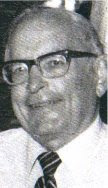
- Retired in 1998 after a 50-year career of editing and publishing Colorado small-town weekly newspapers. He served as president of the Colorado Press Association in 1981 and was awarded an honorary lifetime membership.