Letter published in
the Longmont Times-Call, 7-06-09
ON CML AND COSTS TO MUNICIPALITIES
Another summer outing of the Colorado Municipal League is history. Eight Longmont officials attended this year’s event in Vail at a total cost of $5,840: Mayor Lange, three nights; Councilmember McCoy, four; City Attorneys, Mei, three, Rourke and Friedland, two; City Clerk Skitt, one; assistants Seader, four, and Hinz, one.
The city paid registration fees of $190 each except for Skitt, Seader and Hinz, who were presenters. All apparently qualified for the city’s $159 per night lodging allowance, meals of $46 per day, and those who drove their own vehicle could be reimbursed $.505 per mile for the 230 mi. roundtrip (230x$.505=$116.15).
On the upside, congratulations to Mayor Lange for being elected to the CML executive board. On the downside, I’m a longtime critic of this lobbying/partying organization because it lives almost entirely off the taxpayers through dues collected annually from 263 of Colorado’s 271 municipalities, this year totaling about $1,765,000. And for what? CML offers training for elected and appointed office personnel. In addition to this year’s dues, Longmont has apparently budgeted another $38,613 for that purpose.
Longmont’s population is listed at 82,904 with dues this year of $45,647 or 55 cents per capita. Denver’s population is listed at 530,223 with dues of $153,117 or only 26 cents per capita. How nice.
But it’s really the poor, small towns that I feel sorry for: places like Campo, Bonanza City, Haswell, and Hooper, that cannot even afford to hire a dogcatcher, yet each is expected to contribute upwards of $200 a year to the CML for dues.
In 1998, CML constructed its own deluxe headquarters buildng at 1144 Sherman Street in downtown Denver, close to the Golden Dome. But you won’t find CML paying ad valorem taxes to help fund the public education system – their property is tax exempt.
Two personal anecdotes that I omitted prior to submitting letter to meet T-C’s 300-word limit:
Item 1: As mayor of Simla, Colorado. in 1960, upon finding how CML was funded, I pulled the town’s membership; it eventually rejoined.
Item 2: As publisher of the Louisville Times, the newspaper told of how renown city administrator Leon Wurl (now deceased) got fired in midsummer of 1984, mostly because he was away attending a CML summer conference in the mountains and Louisville ran out of water when the main supply line broke.
P.
Monday, July 06, 2009


Thursday, June 25, 2009
Letter to The Denver Post,
published 6/25/09
BENEVOLENT SUCKERS END UP PAYING TAXES TWICE
Letter-writer Bill Blomberg, 6/15/09, “Don’t extend stadium tax . . .” has it right. We taxpayers are benevolent suckers, not only for helping fund these grandiose professional sports arenas through public-private partnerships, but we usually get hit in the pocketbook again by having to make up for the lost property-tax revenues that would have flown into the public education system had these properties been privately owned.
With commercial property assessed at double the household rate (under the Gallagher Amendment), the amount of tax loss over the years appears staggering. Perhaps a law calling for some sort of an in-lieu fee to make up for the loss in ad valorem tax revenue would be fair and appropriate.
(Redacted: That same idea could be extended to require tort lawyers to pony up a realistic portion of their court winnings as a rental fee for using the elaborate public facilities we taxpayers provide to them to pursue their profession.)
But instead of providing leadership and innovation to plug these holes and tap the wealth where it is, the tax-and-spend Democrats who control our state government waste their time and ours trying to gut TABOR.
What folly.
P.
Saturday, June 20, 2009
STATE SENATOR PLAYS FAST AND LOOSE WITH OPEN MEETINGS LAW
The press is asleep at the switch. Oh no, not again!
Yes, I’m afraid so, as all of the reporters, editors and editorial writers who covered the recent dust-up over Colorado Senate President Brandon Shaffer (of Longmont) meeting with fellow Democrats unannounced and behind closed doors at the state capitol seem to have missed the most important point: This was an egregious violation of the Colorado Open Meetings law.
Briefly, this how the law is explained:
“Legislative Policy: It is declared to be a matter of statewide concern and the policy of this state that the formation of public policy is public business and may not be conducted in secret.
“Who is covered? All boards, committees, commissions, authorities or other advisory, policy-making, rule-making or other formally constituted bodies and any public or private entity which has been delegated a governmental decision-making function by a body or official are included under the law.
“State Public Body includes General Assembly, governing boards of institutions of higher education, state agencies, boards, commissions, etc.
“Local Public Body includes all political subdivisions of the state, such as counties, municipalities, home rule cities, school districts, special districts, metropolitan districts and RTD. (Generally, meetings between staff members are not considered open.)
“Executive Sessions: An executive session is permitted only during a regular or special meeting (a certain formula must be followed). State Public Body (in this case the Legislature) can go into executive session only after two-thirds of the entire body vote in favor. Local Public Body can go into executive session only after two-thirds of the quorum present vote in favor.”
The Denver Post published an editorial mildly chastising Shaffer, referring to the closed-door retreat as merely “a Democratic workshop.” To its credit, however, the Post had earlier requested Shaffer to hold the Democratic Party responsible for reimbursing the taxpayers $4,300 for expenses involved.
We either have open government or we don’t and open is best. Most people outside government understand this truism. What makes so many of them change after we elect them to office? Is Sen. Shaffer above the law?
Longmont voters have made two serious mistakes in recent elections by putting Progressives (neo-liberals) in office. First, sending tax-and-spend Shaffer to the State Senate was bad enough, but after supporting Betsy Markey's election to the U.S. House of Representatives in the 4th Congressional District, she "rewards" the people of Longmont by closing the local contact office, a very valuable service that Representative Marilyn Musgrave maintained throughout her tenure in office.
The Progressives are moving Longmont backwards, even in City Hall.
Sunday, May 17, 2009
Letter submitted to the editor, The Denver Post, not published:
NO HELP IN LETTING IN THE SUNSHINE
The headline on your editorial (Perspective, 5/10/09) relating to Secretary of Commerce Gary Locke’s recent visit to Denver, “Why was public locked out of census meeting?” held promise but the content was about as meek and tame as the reaction of the reporter(s) who failed to challenge the closed-door segment when confronted with it—hardly a whimper. I feel sorry for the dozens of small-town editors who look to the big papers for leadership in forcing open the closed doors of official secrecy. The Post has let them down.
Percy Conarroe
Tuesday, May 12, 2009
TWIN PEAKS MALL: TAX SUBSIDIES COULD BE FOR NAUGHT
Should Longmont’s taxpayers help bail out the ailing Twin Peaks Mall and, if so, then why not extend that favor to every business in town? This gnawing question of fairness weighs heavily on the minds of many locals, as city officials continue to negotiate a “partnership” deal with the mall owner.
Let’s face it: Shopping malls across America are losing their oomph, no matter their location, status or upgrading. The sagging economy and inflated gasoline prices played a part, but the word “anachronism” might better fit the declining shopping-mall era. Fickle shoppers, famous for flitting from mall to mall, are fleeing to the stand-alone big boxes and, ominously, to the matchless variety and convenience of the Internet where, of course, they don’t even have to pay sales taxes.
On April 16 the nation’s second largest mall owner, General Growth Properties Inc. of Chicago, filed for bankruptcy. Of the 200 malls GGP owns, four are in Colorado: Park Meadows in Lone Tree (south Denver), Foothills in Fort Collins, Southwest Plaza in Littleton, and Chapel Hills in north Colorado Springs. All of these four are considered upper tier. Chapel Hills, one of the newer malls in Colorado Springs, lured shoppers from the Citadel Mall in east Colorado Springs, which earlier had plundered the Sears-anchored Southgate Mall on that city’s south side. City officials naturally don’t care who wins the dizzying mall game, just so the tax revenues keep flowing.
Having lived in Colorado all my life and being casually observant of shopping malls around the state, very few of the once-flourishing malls are left. Although not the oldest, Denver’s Cherry Creek is probably still the classiest. Louisville tried valiantly to get into the mall game in 1980 but developer Jacobs-Kahan of Chicago had no luck signing an anchor store and finally gave up.
Retail outlet stores were popular for a while. Clusters sprouted up at places like Frisco and Castle Rock. Probably the most successful was at Loveland -- until the Centerra strip mall opened nearby.
Even Urban Renewal with its eminent domain power and tax increment financing “partnering” with local taxpayers could not save Englewood’s charming Cinderella City Mall, which opened in 1968 to compete with the nearby Villa Italia Mall, built in 1965. Despite the investment of millions of TIF tax dollars to renovate it mid-term, Cinderella City, an elaborate, covered complex, was demolished in 1999.
Villa Italia, despite a $120 million infusion of cash by the City of Lakewood in converting it to a “sustainable” mixed-use housing/stores complex, and after changing the mall’s name to Belmar, it still lost anchor stores Dillard’s and J.C. Penney and has never recovered. Shoppers complained that the “village feeling” of the mixed-use concept was confusing and made the mall hard to navigate.
Boulder’s Crossroads Mall, funded almost entirely with huge amounts of Urban Renewal TIF money--those who know will not reveal the total indebtedness--ran into trouble when the Westminster Mall just down the road (both opened in the early 1960s) began expanding. But of course, the Westminster Mall had diverted shoppers from the once-prosperous Northglenn Mall, helping shut it down. Then, with Broomfield’s bold, new Flatiron Mall arriving on the scene in 1999, the City of Westminster spent $7.5 million helping its mall owner renovate, but to little avail. Flatiron had lured shoppers away from both the Westminster Mall and the Crossroads Mall (refurbished in 1983; closed in 2004 and renamed Twenty Ninth Street) and neither has recovered. All the Crossroads stores except Foley’s were demolished.
The onus is now on Flatiron and its age and vulnerability are showing. The new Event Center nearby is struggling. Looking ahead, no doubt, Broomfield officials, in reconfiguring the city’s boundary into a county, made sure to secure, yes, a viable mall site at the junction of Colo. 7 and I-25, pretty far afield. But upscale anchor stores are scarcer than ever, and discount retailers, disdaining the stiff mall rent, find they can operate just as well on the periphery – in Longmont, that’s just west across the street.
Mixed-use or not, the Longmont City Council has no business diverting tax revenue through TIF into this privately owned mall project -- “on the come” or for any other concocted reason, such as “infrastructure.” Obviously, if TIF availability is a deal killer, then that should raise some red flags.
“Blight” is a term that, unfortunately, reflects negatively on both the property-owner, for letting his holdings deteriorate and doing nothing about it, and the City Council and manager for allowing it to continue. A further example of the city's inaction is the truly blighted, burn-scarred flour mill, in my opinion an eyesore.
The city should get down to business: shut off the sales pitch, fire the high-priced consultants, tell the Twin Peaks mall owner to present his financial capability, submit his plan for review, and whenever he is ready, let’s see the renovating start--without leaning on the taxpayers.
Saturday, May 09, 2009
Letter to editor, Longmont Times-Call
published 5/9/09
APPEAL IN ROCKY MOUNTAIN CHRISTIAN CHURCH CASE TROUBLING
“I sought for the key to the greatness and genius of America in her harbors, fertile fields and boundless forests, in her rich mines and vast world commerce, in her public school system and institutions of learning. I sought for it in her democratic Congress and in her matchless Constitution. Not until I went into her churches … did I understand the secret of her genius and power.” — Alexis de Tocqueville (1805-1859).
Too bad this historic observation by the famous French statesman who toured America in the 1830s escaped Boulder County commissioners Will Toor, Ben Pearlman and Cindy Domenico as they decided to appeal their courtroom setback in trying to keep Rocky Mountain Christian Church at Niwot from expanding to better serve its flock.
A U.S. District Court jury found that the commissioners treated the church on “less than equal terms,” imposed a “substantial burden” on its religious exercise, and unreasonably limited the church. The judge agreed and ordered the commissioners to issue a building permit. They refused.
Unaccustomed to having their authoritarianism blunted, commissioner Toor found all of this “very troubling, from a constitutional perspective,” quoted in 5/1/09 Times-Call.
But it’s also very troubling to many of us that when the government becomes overzealous in regulating religious activities, it is difficult to discern where official bigotry begins and ends.
The commissioners have already sunk $250,000 of our tax money into this $1.13 million save-face exercise, so the economic recession must not be affecting Boulder County.
Let’s hope that if this fight reaches the Supreme Court it will have narrowed into a First Amendment test: “Congress shall make no law respecting an establishment of religion, or prohibiting the free expression thereof.”
That’s really what this power-play is all about. The commissioners through their land-use code think they can do what Congress cannot.
May God bless America.
Saturday, April 25, 2009
Letter to editor, Longmont Times-Call
Published 4-24-09
SEN. SHAFFER CO-OPTS REPUBLICAN VALUES
Regarding state Sen. Brandon Shaffer’s “Colorado’s guiding values,” 4/19/09 Times-Call opinion page: Nowhere identifying himself as a Democrat, he co-opts for his own purposes long-held principles of the Republican Party, such as “putting people above the pressures of special interest groups” and “creating a (state) budget process that is strong and stable … based on the beliefs and the values that guide us.” Sound familiar? That’s right, Republican principles are based on moral and family values.
Recently chosen as president of the upper house of the Colorado Legislature by his fellow Democrats, undeniably an honor, one might think Shaffer ascended to the governorship instead by immediately promising to convene an interim commission of legislators and community leaders “to craft a state budget process.” How this would differ from similar “bipartisan” budget studies underway or already performed by committees appointed by either Gov. Ritter or the Legislature is not clear.
Of course, Shaffer exemplifies the historic role of tax-and-spend Democrats: expand government at every level and control peoples’ lives. That’s all they know how to do. The only difference currently is that the progressive liberals who now run the party think they can outflank the Republicans by hijacking the GOP’s long-held moral principles (e.g., thou shall not steal from Pinnacol) just long enough to form a bipartisan coalition to go about dismantling TABOR –- the only barrier that protects the common people of Colorado from confiscatory taxation.
Do not be fooled.
Voters in states teetering on bankruptcy today such as California, New Jersey, Kentucky and Missouri had the opportunity to adopt their own version of TABOR but failed to act. In all good conscience, we who believe in financial integrity in government cannot let Shaffer and his gang push Colorado into that abyss.
Longmont deserves better representation than this.
P.
Monday, April 13, 2009
ONE OF THE BIGGEST SCANDALS IN OUR MIDST
As suggested in the Longmont Times-Call’s call-in, one way to solve the prairie dog problem at Longmont’s Vance Brand Municipal Airport without exterminating them might be to trap them and see how many of the caring people who show up at these public hearings step forward to take them home to keep in their own backyards.
But because these cute little rodents are known carriers of the dreaded bubonic plague through infestation of fleas, that’s not a good idea. And due to their tunneling ability, of course, building fences and putting up plastic barriers to control them are usually a waste of time and money. Prairie dogs not only attract coyotes, which feed on them, but share their burrows with rattlesnakes.
So what can be done to negate their deleterious effect on properties such as public golf courses, park lawns, public airports and the like? You don’t see prairie dog burrows next to DIA runways, do you, or on the County Courthouse lawn.
Relocation is problematic if not impossible, and public officials must share the blame for neglecting this humane option. While it is true that mankind is encroaching on their habitat, it is also true that Boulder County has accumulated almost 94,000 acres of open space (the city of Longmont also owns hundreds of acres) without setting aside any part of it for relocating and accommodating these unwanted rodents. This is a public scandal in itself, a governmental flaw that the press simply ignores.
Early-on, metro-area counties tried exporting their prairie dogs to rural counties and got away with it for a while – until farmers and ranchers finally rose up and said no, we already have too many and we do not want yours too. Not only do these rapidly multiplying rodents feed on cash crops, they destroy scarce ground-covering by pulling grass out by the roots when they feed (much like grazing sheep do, a practice that triggered early Colorado settlers to gunfights between cattlemen and sheepmen).
There are places for these eco-important rodents to exist in peace in Boulder County, and I think people who hammer officials such as those at Longmont’s airport who find that they do not have much choice except extermination need to take their harassing complaints directly to the Boulder County Commissioners and the Longmont City Council, whose members do have the power and authority to set aside some open space land to mitigate this aggravating problem. Fair enough?
P.
Saturday, April 04, 2009
THE DIFFERENCE BETWEEN PUBLIC AND PRIVATE INSTITUTIONS
The taxpayers might as well throw in the towel because whatever authority they once held over the public institutions that enjoy their forced contributions is disappearing at an astonishing rate and the Ward Churchill case is only the latest example. The University of Colorado is not a private institution. It depends a great deal on taxpayer funding and therefore is governed by an elected Board of Regents. After due diligence these regents, who represent all the people of Colorado, found that employee Professor Churchill’s work was not up to standard, so they fired him. Along comes an accomplished tort lawyer who smells money and knows how to play a tune on journalists’ butts, sues the University, overwhelms a fumbling defense lawyer who no one has ever heard of, succeeds in making a First Amendment case out of it, which it is not, and he and his client prevail.
The taxpayers might as well throw in the towel because whatever authority they once held over the public institutions that enjoy their forced contributions is disappearing at an astonishing rate and the Ward Churchill case is only the latest example. The University of Colorado is not a private institution. It depends a great deal on taxpayer funding and therefore is governed by an elected Board of Regents. After due diligence these regents, who represent all the people of Colorado, found that employee Professor Churchill’s work was not up to standard, so they fired him. Along comes an accomplished tort lawyer who smells money and knows how to play a tune on journalists’ butts, sues the University, overwhelms a fumbling defense lawyer who no one has ever heard of, succeeds in making a First Amendment case out of it, which it is not, and he and his client prevail.
Friday, April 03, 2009
THEY ARE PUSHING HARD FOR SOCIALISM, ARE YOU READY?
Abraham Lincoln, where are you? A government of the people, by the people, and for special interest groups is now what we have in Washington D.C., as over 100 of America’s most powerful and influential leftist-liberal organizations have formed a new coalition called Rebuild and Renew to boost President Barack Obama’s socialistic program to redistribute the nation’s wealth, starting with his current $3.6 trillion budget. Most of the members of this group are already supping at the public trough, while others either intend to, or will act as cheerleaders or even strong-arm enforcers. Government largesse manufactures votes, they know it, and that’s what this game is about.
R&R’s roster is loaded with familiar names. Heading the list is ACORN. A few more at random: the AFL-CIO, AFSCME (American Federation of State, County and Municipal Employees), Americans for Democratic Action, AAUW (American Association of University Women), Common Cause, Greenpeace, MoveOn Action Fund, National Education Association, People for the American Way, Sierra Club, and ProgressNow. The American Civil Liberties Union reportedly joined but for reasons not disclosed withdrew.
More about ProgressNow: Based in Washington D.C., it has a Denver affiliate called ProgressNowColorado, which has played and continues to play a significant role in Longmont city politics, such as fighting a church expansion project and electing key council members. Its Denver website has deleted a video of Longmont team leader Jen Gartner extolling the success of a petition drive she and her teammates engineered, but still posts a list of 80 Longmont members, most of whom are anonymous.
I lived through it: Franklin Delano Roosevelt introduced socialism in 1933 with his New Deal and it did not work (the unemployment rate in 1939 was still at 17%), Lyndon Baines Johnson tried it in 1964 with his Great Society and it did not work, now Barack Hussein Obama thinks he is smart enough to make it work. Abraham Lincoln, where are you?
P.
Wednesday, March 25, 2009
SOME OBSERVATIONS ON CURRENT NEWS COVERAGE
The Denver Post, going all-out to reinstate former University of Colorado professor Ward Churchill and line his attorney’s pockets, ran today (3/25/09) a front-page story by reporter Kevin Vaughan that could easily have been juxtaposed with leftist-liberal columnist Mike Littwin’s views, on page two. Not until we reach page 13B or 29 pages later do we get a different look at this issue in an opinion column by Vincent Carroll. Also, we all know that Bibles are nixed in the courtroom, yet Churchill was able to display a sacred symbol (feather and red cloth) at will. In my opinion, this inconsistency, along with the generous amount of hearsay evidence allowed in this case have been ignored by the media.
The Times-Call (3/25/09) ran a front-page story on the as-expected discovery of blight around the Twin Peaks Mall. This finding, of course, means that the city fully intends to partner financially with the mall company that owns both of Longmont’s shopping malls by diverting tax revenue into the Twin Peaks project through Tax Increment Financing, otherwise this expansion study would not have been needed. Unclear in this story: “The expanded area would bring in an additional $11.8 million in property tax value and $1.6 million in sales tax revenue for a total of more than $32 million.” How’s that again?
The Denver Post, now that the Rocky Mountain News is defunct, is having a field day promoting big government. In a 3/25/09 story headlined “Health care plan gains,” the Post breathlessly tells of a Democratic bill just passed by the Colorado House designed to snatch away $600 million a year from hospitals to pay for government-mandated health insurance. (Where in the Constitution does it provide for that?) Do the Post and these politicians really think that most hospitals are going to surrender that kind of cash meekly and not try to replace it through increased fees placed on all patients? Welcome to the land of make believe –- and price controls.
Sunday, March 22, 2009
MORE MANIPULATION BY THE MEDIA
“Trillion-dollar trouble” screamed The Denver Post’s 60-point front-page headline over a two-and-one-half page presentation by reporter David Olinger on 3/20/09, followed by “Hazards in the water,” another two pages of near hysteria two days later -- all detailing how laggard we are for letting Colorado’s infrastructure just fall apart and it’s going to cost $2.2 trillion in the next five years to fix it.
Thusly the Post’s stern lecture series gets off to a feeble start by trying to pin the blame on you and me for somehow failing to address every conceivable infrastructure problem our state faces (where have all the politicians and their comforting press gone?) and forcing people to live in conditions of their own making, such as having to toss dishwater out the back door. No mention is made of governmental foibles such as misdirecting highway funds statewide or the bottomless FasTracks money pit or lack of personal responsibility.
Whose fault is it that our roads and bridges are crumbling? Never mind that the railroads used to build roadbeds and bridges that lasted a long time and did not crumble under the pounding of extraordinarily heavy loads and stress. And oh, they were maintained at a negligible cost, a must factor in the private sector.
Issue: Safe water, sanitary sewers. Haven’t those who choose to live in a rural setting ever heard of caveat emptor? (As most people should know, Colorado abounds in rocky soil, impervious adobe and shale deposits.) Olinger tells of the expensive sewage pumping and exporting necessary in a rural neighborhood but offers no clue as to why installing a modern disposal system would not be cheaper and safer in the long run.
The city of Alamosa’s water problems sound even more devastating (not good news for the local chamber of commerce), but because Colorado municipalities possess the unique authority to issue bonds to provide reasonably safe water and sanitary sewer services without a vote of the people, there is simply no excuse outside of an emergency for Alamosa to be distributing unsafe water. What has happened to the once state law that required domestic water providers in Colorado to publish frequent purity test results in the local newspaper so the people may know?
Not only do these rural and city “victims” apparently refuse to pony up for the most basic of services and repairs or replacements like the rest of us do, they expect us to pay for theirs too.
Unfortunately, this same blame-game is permeating Colorado’s primary and secondary educational system as well, as more and more people look to the state and now the federal government to pay for constructing and repairing their local school facilities. Why not? No use paying for something yourself if you can find someone else to pay for it.
It used to be called sustainability; now the politically correct code words are bailout or stimulus, the obvious reason for this series. I can scarcely wait to see the Post’s next episode to find out what else is my fault. All I can say is, I’ve done my best to try to be a responsible citizen.
Friday, March 20, 2009
WANNA RUN FOR OFFICE IN LONGMONT?
FIRST HIRE A LAWYER AND ACCOUNTANT
As if it isn’t difficult enough already to find qualified people to run for city offices, I wonder if it’s a mistake to keep adding to the red tape that we expect them to cut through in order to be elected. Is it reaching the point of having to hire a lawyer and an accountant in order to run for the office of dog catcher?
Upon volunteering to serve as mayor or councilperson, who wants to risk being fined up to $4,000 by an “election committee” for failing to promptly file some sort of a report required under the city’s convoluted Longmont Fair Campaign Practices Act? That’s right, listed in the newly revised version just adopted by this council is a penalty calling for a fine of $400 per day for up to 10 days. However, a candidate can accept coin or currency (contributions) in excess of the limits set by this Act and escape with a $50 fine. “Encouraging withdrawal from a campaign,” whatever that is, calls for a fine of $499. Beware of misuse of the city’s indicia (official insignia which you may or may not need), that’s a $499 fine. And get this: “Any violation of this Act not otherwise set forth herein, $100.” That covers an awful lot of possibilities. Read this legalese for yourself in Ordinance O-2009-12; I’m not kidding.
Also: If the current Longmont City Council members are serious about keeping partisanship out of city politics -- as stipulated in the City Charter -- then they should have deferred to us (the electorate) the right to choose who we think is suitable to serve on their newly created “election committee.” This panel is being endowed with awesome power and authority over our elections and processes, including conducting a court of law, and each member should be voted on by the people. I do not want to see it packed with the usual ideological activists from either side of the aisle.
That will be hard to avoid, and that’s why the council should stay out of it. Take applications, let the people decide.
Tuesday, March 17, 2009
LETTERS THAT DO NOT GET PUBLISHED IN THE PAPER
To: Denver Post sports columnist Mark Kiszla, 3/10/09
Carmelo Anthony has great potential but for some reason -– and I’m getting tired of reading and hearing about it –- he is unable to bridge the gap between being a young star and taking over the leadership role that the Nuggets so desperately need. His maturation here has not yielded the hoped-for result and he should be traded, for his benefit and the team’s. I don’t believe the coaching at Cleveland or Utah is superior to Denver’s, yet LeBron James and Deron Williams seem to have no trouble fulfilling their take-charge duties big-time, to which their teammates respond and the fans love every moment.
Thank you Mark Kiszla for not continually blaming fatigue when the Nuggets lose. TV-caster Scott Hastings should be arrested for not coming up with a better excuse. A “tired” Houston bunch came to town and sacked our Nuggets, even though they missed what, 15 free throws?
And oh, I hope Dean Singleton hustles you guys up some advertising so we can continue reading your stuff. Lots of copy and skimpy ads in a 10-page section is an ominous sign but I don’t have to tell you that.
P.
Sunday, March 15, 2009
MANIPULATIVE MEDIA
AURORA, the essence of Colorado’s once high-flying cities, is experiencing a budget shortfall (isn’t everybody?), so the Denver Post comes up with a story on 3/12/09 headlined “Hard times for Aurora libraries.” Unfortunately, the Post falls for the same old formula used by politicians to get what they want (more money) by threatening immediate cuts in popular services such as libraries (and filling potholes in the streets.) And like good little boys and girls the taxpayers will probably open their pocketbooks wide.
SPEAKING OF good little boys and girls, Ward Churchill’s tort lawyer has lots of so-called journalists in the region’s print and electronic news media pretty much wrapped around his finger. This case may have to go through the U.S. Supreme Court before we ordinary citizens find out if it is possible for a college professor to hide behind the First Amendment for committing academic violations for which he was duly tried and found guilty by his own peers.
TALKING ABOUT M&M (manipulative media), it looks like we’ve got a suspect ahead. Suddenly blossoming out with their own taxpayer-funded newspaper (isn’t that nice?), could it be that the members of Longmont City Council see an election lurking on the horizon? Possibly, but there may be something else going on here: the growing tendency of those who govern us, even at the local level, of wanting us to believe that we cannot exist or even live our lives correctly without their voluminous official information being poked down our throats in one way or another. As everyone knows, the City already has numerous communication avenues (most of which we can take or leave) including person-to-person, a Web site (which could stand some upgrading), utility-bill enclosures, two exclusive TV channels, weekly meetings, a local daily newspaper that's legitimate, and local FM and AM radio stations. But what better way to attract favorable attention than to control the content of and periodically distribute a newspaper to every mailbox in the city. Who is next to enter this costly publicity game? Will the Boulder County Commissioners soon be publishing their own newspaper, courtesy of the taxpayers and distributing it to us? How about the St. Vrain Valley school district? Shouldn’t RTD be putting out a newspaper also to communicate with us about FasTracks? Oh, and DRCOG and Gov. Ritter and the state Legislature, wow! Just think of all the possibilities. First thing you know our mailboxes will be stuffed with government propaganda -- just like the turkeys that we are.
P.
Sunday, March 08, 2009
Commentary
TOO LITTLE WE KNOW, TOO LATE
“Tree thinning at Heil Valley Ranch.” The Longmont Times-Call reported in its 3/6/09 edition that contractors have been brought in to “thin” (clear-cut, as the excellent and disturbing accompanying photo shows) 163 acres of trees on this taxpayer-owned property. Just how Boulder County’s open-space czar can unleash mayhem such as this on the environment without the public knowing about it until after we see a gigantic machine actually chewing up the forest and destroying habitat, is beyond the pale.
There are excuses all over the place, of course. Those responsible call it “healthy destruction.” But what sense does it make, especially in Colorado where it’s so terribly hard to grow anything green because of the thin air, short season and lack of moisture, to deliberately defeat natural replacement? There is nothing new about insect infestations and fires. If the county Open Space bureaucrats were truly interested in saving the forest from insect infestations, they would use insecticides and be done with it. Cutting the infected trees may slow, but it is not going to stop the offending beetles which will simply move on to infect and kill more trees. Likewise, if these county bureaucrats were truly interested in preventing forest fires, they would allow the careful, commercial harvesting of timber and underbrush to create breaks so that the taxpayers would at least not have to shell out $250,000 for periodical “thinning” – an amount that more appropriately should have gone toward repaying the huge $192,000,000 debt run up on us taxpayers by the unelected officials running the Boulder County Open Space department. Relevantly, was this quarter-million dollar job put out for bid?
“This project will make the forest resemble the ones settlers saw when they first arrived in Colorado … a mosaic of uneven-aged forest,” the news story said. Well, who knows what they actually saw? To try to replicate the past is a nice dream but there are many things about Colorado that no amount of money or good intentions can ever bring back. (Note: My great-grandparents settled on the east-central prairie of Colorado in 1888. I’ve lived here all my life. Gone from that region where I grew up is most all of the “tall grass”; but buffalo grass, a sturdy, nutritious drought-resistant variety has survived and taken over, naturally.)
The message? Rather than tinkering, sometimes it’s better to do nothing.
P.
Saturday, March 07, 2009
Letter to Longmont Times-Call
Published 3/5/09
IMPROVING PROPOSED CAMPAIGN RULES
I see that Longmont’s Fair Campaign Practices Act is being revised by our City Council. For some of us who occasionally get interested in what goes into the sausage as it’s being made, here are a few ingredients that I think might be added to make it better (if not already included.) For example:
To be fair, powerful outside political influences such as the Denver branch of a national organization known as ProgressNowColorado.org, which has been very active here, should be barred from local politics. We’re supposed to have a city law against playing partisan politics, but by identifying themselves merely as a “think tank” they’re home free. If City Council truly intends for our city elections to be “local and nonpartisan,” then it should clearly define what that means and enforce it.
Likewise, If the genuine goal is to keep Longmont elections in the hands of bona fide Longmont residents, then something has to be done about people who live outside the city limits but insist on becoming quite involved in city politics anyway, even though they are ineligible to vote here.
Also, I’m not sure it’s wise to be putting the City Clerk into the role of accuser, judge, prosecutor and jury, all at the same time, when it comes to allegations of violating provisions of the Fair Campaign Practices Act.
I’m not challenging her ability to engage in all of those roles, but I think in a smaller city such as Longmont the executive function should be kept separate from the judiciary. That one or one-thousand former candidates may not have liked the decision a city judge handed out, is no reason to bypass the courts –- if, indeed, that’s what this specific revision is about.
And please, we’re debating policy here. So keep your cool.
P.
Letter to Erie (CO) Review
Published 3/4/09
DON’T TAKE HONOR AWAY FROM LEON A. WURL
No, no, no! That’s my response to the Erie Town Board’s apparent decision to rename the Leon A. Wurl Parkway. To rob this man of his legacy is to dishonor his unselfish contributions to the town. (Number one on my list in that regard is Erie’s Safeway Shopping Center, which he landed almost single-handedly right away.) After all, it was the town’s leaders who hired him in 1994 to come in and spur Erie’s growth, and did he ever comply -- perhaps too fast, some of us who lived there thought. But that’s not the point.
If the current Erie Town Board seeks uniformity in street names, why not simply change the name of the entire route of this arterial between U.S. 287 and I-25 to Wurl Parkway?
Despite the criticisms leveled by me (and others) at Leon Wurl regarding some of his administrative policies over the years, he was an outstanding leader in his profession and deserves the quasi-permanent recognition that a street name offers. Buildings, unlike streets, as you know, can come and go.
Give this man his just dues.
P.
Thursday, March 05, 2009
Letters that don't get published:
3/3/09 to The Denver Post
Re “Legislature 2009 - Senate debate turns ugly,” news story in the emerged Denver Post, 3/3/09, bylined Tim Hoover.
Attaway, Denver Post: The conservatives are always the bad guys and the liberals know exactly what’s best for us. It’s this sort of crapola woven into the news columns that drove me away from the Post to the News years ago.
If Greg Moore cannot or will not sanitize the Post’s news columns, which seems apparent, then I have no desire as a transferee to stick around.
Sell your ideology on your editorial pages where it won’t stand in the way of disinterested reporting. Please.
–Percy Conarroe
Published 2/26/09
in the Old Berthoud (CO) Bulletin
ANOTHER LANDMARK BITES THE DUST
I appreciated Melanie Crane’s letter of 2/11/09. Although I do not live in Berthoud, I will miss the Wayside Inn. My wife and I discovered its delicious fried chicken over 50 years ago, while motoring from Simla where we published the local newspaper (1952-65) to Fort Collins to attend a football game. I’m wondering if rerouting U.S. 287 (while probably virtuous in many respects) had anything to do with the closing of the Wayside or other businesses.
Ms. Crane also mentions the eternal problem faced by many a small town: that of preserving its unique ambiance while at the same time trying to modernize. Apparently Berthoud is no exception.
I can only say that, in Louisville where we lived (1965-98), the city, despite my editorial protestations went ahead and installed decorative “elephant ears” to modernize Main Street. Later, when parking problems arose, business owners asked the city to please remove the protruding concrete obstacles to open up more spaces -- but the city said no, it would cost too much. They’re still there.
As for business owners everywhere, I believe that they can do a lot to help themselves by advertising regularly in the hometown newspaper(s). Thank you for letting an “outsider” comment.
P.
Subscribe to:
Posts (Atom)
About Me
- Percy Conarroe
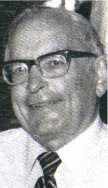
- Retired in 1998 after a 50-year career of editing and publishing Colorado small-town weekly newspapers. He served as president of the Colorado Press Association in 1981 and was awarded an honorary lifetime membership.