That's how it is. Period.

Tuesday, March 15, 2011

Boulder County running up huge debt buying open space

But first: Saving the environment by living where we work. . .

(To meet space limits, a redacted version of this letter appeared in the 3-8-11 edition of the Longmont Times Call.)

Do we really believe in practicing insofar as possible the concept of living in the same community where we work?

I think Longmont is fully capable of determining its own destiny, therefore its civic leaders should not be buying so readily—both financially and philosophically—into *PLAN-Boulder County’s (People’s League for Action Now) anti-growth strategy of strangling our community with open space and irrevocable easements to kill future housing projects that might become necessary to accommodate any realistic increase in economic activity (jobs) around here.

At stake right now is the possible site for the proposed Aerospace and Clean Energy Manufacturing and Innovation park (ACE), which would create an estimated 10,000 jobs. In the race for this economic prize, according to the Daily Camera, are Erie, Greeley, Longmont, Louisville and Loveland. Noticeably, Boulder doesn’t seem to be interested, probably because it’s out of land for housing and is already overflowing with commuter-dependent industries.

One of ACE’s qualifying requests was for the availability of an existing industrial building of 300,000 to 600,000 square feet. Another request was for a 200-to-400 acre greenfield, shovel-ready with freeway access.

Amateur economist that I am, I’d pick Loveland as the best bet. Longmont made a mistake years ago by not annexing clear out to I-25 and is now forever cut off by you-know-what, but otherwise seems well qualified. Erie has direct access and plenty of room for housing, but has been slow to develop infrastructure for its interstate frontage. Louisville faces Boulder’s end game of buildout and what space is left is ultra-expensive. Since proximity to the University of Colorado as well as the federal establishments already operating in Boulder will be of importance to ACE, Greeley seems a bit distanced from the action.

Having said all this, politics as usual will dominate the selection process. You can count on that.

Percy Conarroe

Longmont CO 80501

*PLAN-Boulder County was launched in 1959 as PLAN-Boulder by two CU professors, Al Bartlett and Bob McKelvey, now retired. This powerful behind-the-scenes anti-growth group controls politics in the city of Boulder and now its influence permeates county government. PLAN-Boulder takes credit for imposing Boulder’s famous “blue line” growth barrier but let NCAR puncture it in 1961 with a facility built on a 500-acre site on Table Mountain. Likewise, in 1964, it let in IBM (located near Niwot, Boulder annexed it by flagpole) but in 1980 drove away Systems Dev. Corp. and its potential 4,000 jobs. PLAN-Boulder County fought the expansion of nearby Superior but was strangely silent when the city of Boulder sold some of its Big Thompson water allotment to the town to spur its housing development. McKelvey has since moved to Montana but Bartlett is still active in the group.

IN ANSWER TO A CRITIC

In his response to the above letter two days later in the 3-10-11 edition of the Times-Call (my, what a quick turnaround!), Mr. Gregory Iwan, who identifies himself as an expert economist, urban planner and real estate appraiser, claims that Longmont already has 4,000 vacant residential lots platted that are “growing tumbleweeds” and, at 1.7 jobs each, those would be sufficient for ACE’s employees.

His equation conveniently ignores the housing that will also be needed to accommodate the increased service, commercial and retail job opportunities that ACE brings. I don’t know where he expects those people to live in order to be near their work place (as I suggested).

Oh, and the owners of those platted lots that are “growing tumbleweeds” do indeed contribute taxes to help fund our schools, county and local governments, including fire and police protection. Perhaps Mr. Iwan can quote some statistics on how much his preferred government-owned open space pays in taxes to help fund these essential public services.

Boulder County, founded in 1861, covers roughly 485,000 acres of which 34 percent or 167,761 acres were already set aside as public land. (Source: Colorado Year Book, 1962-64.) To those 167,761 original acres add the approximate 95,000 acres purchased by Boulder County, the 45,000 acres added by the city of Boulder, and the 2,000 acres added by the city of Longmont, and the grand total of open space acreage totals around 320,000 acres, meaning that roughly 65 percent of the land area in Boulder County is now owned by the government. Conservation easements account for only a tiny portion of the total acreage.

SWIMMING IN DEBT and the newspapers won’t report it. Boulder County, in its frenzy to buy land, has run up a debt of over a quarter-billion dollars. It uses voter-approved sales tax revenues as seed to leverage big, long-term bonded indebtedness. According to the Boulder County Finance Department, this debt totaled $267,852,665 (principal and interest payable) as of its most recent audit report of 2009. How the county commissioners could run up a debt of this magnitude under TABOR should at least be worthy of a news story.

Wednesday, January 26, 2011

Initiative process already complicated

As if the process is not already complicated enough, Democratic state Sen. Brandon Shaffer of Longmont wants to make it harder for the people of Colorado to initiate their own laws. Surprisingly, the Times-Call agrees.

Our First Amendment right to petition our government is involved here and considering the glut of laws the Colorado Legislature passes every year, mostly to control our lives, the number of initiated proposals adopted by the people pales in comparison. A state web page titled “Session Laws of Colorado 2010 Second Regular Session, Table of Enacted House Bills” shows 431 bills were passed with four vetoed; a separate table of enacted Senate Bills shows 217 were passed with no veto. Total bills enacted, 644?

In contrast, in 2008 only four of 14 proposed amendments passed and in the 2010 election, only one of seven was approved. Don’t underestimate the wisdom of Colorado voters.

Some of Shaffer’s ideas:

--Require a 60 percent majority statewide vote to pass an initiative. (Okay then, to be fair, every law passed by the state legislature should require a 60 percent majority vote in both houses.)

--Require initiative petition signatures to be gathered in each of the state’s seven congressional districts; increase the number of signatures needed. (These steps won’t have much effect on discouraging the moneyed interests but will hamper the process for the common people.)

The basis for most of this ongoing bluster over constitutional amendments is TABOR. Instead of huffing and puffing over that law which has been on the books for nearly 20 years now, why not simply write an amendment to repeal it, gather the necessary signatures and put it to a vote of the people? The same can be said of the Gallagher Amendment and Amendment 23.

Really, are we incapable of governing ourselves?

Saturday, January 15, 2011

Opinion piece regarding the Colorado Press Association

As the cliché confirms, the arrangement could not have gone on forever, but the alternative will never be the same. I’m referring to the Colorado Press Association abandoning its long tradition of holding its prestigious annual convention in one of the World’s most prestigious venues—Denver’s grand old Brown Palace Hotel.

I see in the association's in-house newspaper, the Colorado Editor, that after a continuous run of 51 years at the Brown Palace and despite a healthy increase in attendance this past year, the CPA board of directors decided to move the whole caboodle down the street a few blocks. Whether the Associated Press which usually meets concurrently with the CPA will follow was not mentioned.

Memories to some of us are trivia to others. So be it. The shiny new place no doubt has a fancy bar where friends can hoist a few, but I doubt the ambiance will match that of the Ship Tavern. As the new, greenhorn prez of CPA in 1981, I met there with a feisty fringe-group of journalists known as the “surly malcontents” to find out what they had on their minds. Led by Ed Quillen and Bob Cox, their main protest was that the CPA was “run by and for the fat cats.” No, I told them, if that were true then a little guy like me, who started out with absolutely nothing, would never have been allowed to rise to the top. After the second round or so in this inimitable setting, we all got along just fine.

But back to the present: I wish the CPA leaders would have explained the issues in more detail to the members before cutting these historic ties. Have contest awards become the only reliable drawing card? If so, small wonder anyone needs overnight lodging.

As CPA president Jeanette Chavez said in announcing the change of venue, talk of moving the convention was not new. Yes, it’s been moved several times prior to settling comfortably into the Brown Palace. Debra Faulkner, historian at the hotel shared this information:

The first time CPA booked its convention into the Brown Palace Hotel was in 1924. From that year through 1958, CPA utilized four different hotels: the St. James, Albany, Cosmopolitan and finally the Brown Palace.

Alas, it is difficult for some of us to wave goodbye to this long-time, faithful friend of Colorado newspapers.

--Percy Conarroe

Sunday, December 26, 2010

The lowdown on RTD FasTracks

(Letter to editor, published 12-26-10 in the Longmont Times-Call.)


I agree with former Longmont Mayor Fred Wilson’s astute assessment in his recent letter in the Times-Call that, although we are paying dearly for it, the ultra-expensive RTD FasTracks passenger rail service will never reach Longmont. And, I would add, if through some miracle of miracles it does happen to reach here, the cost to ride it will be so high that few people will use it.

The concept is not new. Although Longmont was not hooked into the original interurban passenger rail service which began operating between Denver and several points in Boulder County and Adams County over a century ago, this service continued for 18 years before it finally went broke. Here are some excerpts from author Carolyn Conarroe’s account of this historical transportation service (a.k.a. The Kite Route) in her book, “The Louisville Story,” published in 1978 (www.conarroe.com).

"In 1908 the ultimate in convenient transportation, the (electric-powered) interurban, began operating. The Denver Interurban Co. used the Colorado and Southern RR tracks to operate 16 trains a day into and out of Denver . . . serving Boulder, Louisville, Lafayette, Marshall and Eldorado Springs. (Other stops indicated on a map accompanying the text include Globeville, Westminster, Standley Lake, Broomfield, Fairview and Superior.)

"The interurban system was set up because its financial backers expected a population boom that didn’t occur and the line went into receivership in 1918.

"Service continued, but a tragic collision of two interurban trains in 1920 just out of Globeville in Adams County claimed 13 lives and led to legal damages which pushed the ailing interurban into bankruptcy.

"The company reorganized and tried to continue but couldn’t attract enough riders and in 1926 finally had to shut down."

To quote Yogi Berra: “This looks like déjà vu all over again.”

Saturday, December 25, 2010

BoCo Commissioners keep hassling church


(Letter to editor, published 12-09-10 in the Longmont Times-Call.)

As if it’s not questionable enough for the Boulder County Commissioners—after being foiled by a federal judge and jury whose verdict of unequal treatment was upheld at the appellate level—to dig deeper into the taxpayers’ pockets to take their fight against the Rocky Mountain Christian Church’s expansion project to the Supreme Court, other tax-supported groups are joining the fray.

Two of the more familiar organizations filing supporting briefs as to why the Supreme Court should hear this case are Colorado Counties, Inc. and Colorado Municipal League. For those of us who live in incorporated areas, lucky us: we get to pay dues into both the CCI and the CML. There is no law against their filing of briefs, but the quid pro quo seems clear: “You send us your membership dues and we will scratch your back.”

The commissioners defend the considerable legal costs involved in trying to stop the RMCC expansion--a project that appears to be of little or no harm to anyone or anything--as being covered by insurance. But there are many other expenses to the county besides legal fees, and any premiums or cash contributions by the county into an insurance pool (or company) would still have to come from the taxpayers.

Local governments have the authority to write and enforce building codes, but there is no guarantee against their making mistakes or overreaching. That’s where the Religious Land Use and Institutionalized Persons Act enters this picture and makes it doubtful that the Supreme Court will take this case.

Since the church in question is located at Niwot, is its site rural or urban? Remember that the county itself built a rather large office building/vehicle storage facility in a rural setting just west of Longmont with neither a whimper heard nor a lawsuit filed.

Flood threat is real


(In response to an article titled "City updating flood map," published 11-10-10 in the Longmont Times-Call.)

There is no simple way to prepare for flooding of the kind that roared down the Big Thompson canyon in 1976. The National Weather Service reported that besides wreaking havoc, that storm caused 150 deaths, a new high in Colorado’s recorded history. (100 people died in a flood near Pueblo in 1904.)

Headwaters of both the Big Thompson river and the north branch of the St. Vrain river (Longmont's major stream) lie in roughly the same territory, which tells me (and I’m no expert on this subject) that, by a quirk of Nature, the 12 inches of rain that fell in five hours over the upper Big Thompson canyon could just have easily hit the St. Vrain runoff instead.

Fortunately, because of its distance from the mouth of Big Thompson canyon, the city of Loveland escaped most of the wrath of the 1976 flood. Longmont holds a similar advantage, but its flood mitigation efforts are complicated by the fact it straddles two major drainage basins: the St. Vrain river and Lefthand creek, which originates in the northern Indian Peaks Wilderness area.

Possibly most vulnerable to a 100-year flood is the city of Boulder. Unlike Loveland and Longmont’s distance factor, Boulder’s downtown sits right at the mouth of Boulder Creek canyon, with Barker Dam at Nederland providing about the only protection. Also flowing through Boulder is South Boulder Creek, downstream from Gross Reservoir.

I’m glad our city officials recognize Longmont’s vulnerability to flooding. But in this county, for reasons I don’t understand, the public seems to be much more anxious to buy land to look at, rather than investing in flood mitigation to save lives and property.

We can fight and argue over chickens, trains and airport runways. But unlike flooding, those issues are hardly of life-threatening proportions. (And no, I don’t live on a floodplain.)

Tuesday, November 09, 2010

Letter published 10-20-10


The Longmont Times-Call has long been recognized as the conservative voice of Boulder County politics, but it’s hard to find much evidence of that attribute in the choices it’s making in the current election. (Re: T-C editorial, 10-15-10).

Some examples: For county commissioner, the T-C recommends incumbent Democrat Cindy Domenico over Republican Dick Murphy. Domenico already has enjoyed a nice, long run as county assessor, and there’s no reason she can’t step aside to make room at the power table for a Republican who might at least ask questions from a different point of view. Does it not bother the T-C to realize the conservatives have no representation in the county’s policymaking processes?

For county clerk, the T-C likes incumbent Democrat Hillary Hill. She has done a credible job, but there’s nothing that indicates Republican Daniel Martin could not step in and do even better.

For county treasurer, the name Bob Hullinghorst (the T-C’s choice) faithfully reflects the good ol’ boy Boulder syndrome, which is all Democratic--first, last and always. Isn’t it enough that Bob’s wife, Dickey Lee Hullinghorst, a lobbiest for the county for 22 years, is now the representative in State House District 10? Republican Marty Neilson is perfectly capable of running the treasurer’s office and in all fairness deserved the T-C endorsement.

Finally, the T-C chooses to roll over another capable candidate, Republican Joel Champion, to endorse Democratic incumbent Jerry Roberts for assessor. Champion, of Longmont, possesses a credible resume’ and having a Republican installed in that office—along with changes in the other county offices every few years--can only result in better government.

Look for the names Murphy, Martin, Neilson and Champion on your ballot.

One-party rule is upon us in Boulder County and we conservatives must work together, including the local newspaper, to resist it.

Thursday, August 26, 2010

Letter submitted to The Denver Post, not published


For the sake of transparency, candidates nowadays are expected to surrender their income tax filings for five years to The Denver Post staff for review and comment.

To be fair and for the sake of transparency, The Denver Post should release its company’s five-year income tax filings to any candidate who requests them, along with the income tax records of each political reporter or commentator.

Letter submitted to the Daily Camera, not published


I noticed in attorney general candidate Stan Garnett’s letter to the Open Forum (Camera, 8/20/10) that he apparently has no qualms about inviting people to use his office’s email address to contact him for political discussions. He also needs to clarify the funding and usage of the direct telephone line he mentioned as also being available. Is this a standard fixture in the District Attorney’s office, or is it an extra line paid with campaign funds?

Tuesday, July 20, 2010

Colorado Municipal League: Spend taxes electioneering?


(To meet space requirements, a shortened version of this commentary appeared in the 7-18-10 Longmont Times-Call letters column.)

Painful budget problems seem to have faded into a bad dream as hi ho, hi ho, it was off to the mountains they went, 450 officials representing Colorado towns and cities to attend the annual summer outing of the taxpayer-funded Colorado Municipal League, June 22-25 at Breckenridge.

Longmont tied with Glendale for sending the largest delegation: 14. Others from the region: Boulder 11, Loveland 8, Mead 7, Erie 7, Lafayette 6, Denver 4, Firestone 4, Dacono 4, Frederick 3, Berthoud 2; Louisville 1.

Annual CML dues for example: Longmont contributes $44,276; Glendale, $7,650; Boulder, $69,284; Loveland, $33,089; Mead, $1,229; Erie, $2,134; Lafayette, $12,636; Denver, $148,523; Firestone, $1,263; Dacono, $1,259; Frederick, $1,643; Berthoud, $2,771; Louisville, $16,169.

Longmont Mayor Bryan Baum and five council members attended: Sarah Levison, Sean McCoy, Alex Sammoury, Katie Witt and Gabe Santos. They all stayed two nights; each received $113.63 mileage reimbursement (227.26 miles @ $.50).

City manager Gordon Pedrow, assistant Sandi Seader (she was on the program), city attorney Eugene Mei and deputy attorney Jay Rourke also stayed two nights. Assistant attorneys Jeffrey Friedland and Ed Yosses stayed one night. Pedrow and Mei apparently drove city-issued vehicles. Mileage reimbursements: Rourke, $46,97; Friedland, $47.70; Yosses, $57.07; Seader, $56.50. Planner Benjamin Ortiz and purchasing manager Danielle Hinz were also on the program and didn’t stay overnight. Hinz was reimbursed $18.05 for one meal and Ortiz drew $113.63 mileage.

Total expense: $8,295.

After reading the Times-Call afterwards, I’d say Longmont got the biggest bang for its buck – in embarrassment, that is, as the struggle for power slopped over from Longmont into the nice mountain getaway. Having lived in six different communities myself (one of which I served as mayor and would not allow it to join CML), too many people who get elected to council in Longmont nowadays think they are mayor and they are not. You simply cannot have 14 hands on the steering wheel and expect to stay out of the ditch.

Apparently unappreciative of the taxpayers back home that make the Breckenridge festivities possible, the Colorado Municipal League issued this announcement which appeared in USA Today’s state-by-state roundup for 6-25-10:

Colorado: Breckenridge Communities across the state are gearing up to fight three tax-limit initiatives on the November ballot. Members of the Colorado Municipal League are targeting Proposition 101, which would reduce automobile and telecommunications taxes; Amendment 60, which would cancel voter authorized tax-limit overrides; and Amendment 61, which would limit government borrowing.

So they’re gearing up to use our tax money to influence our votes. How nice. And all along I thought it was unlawful for the government (and its agencies) to participate in the electoral process.

Wednesday, June 23, 2010

Turning campaign laws into a political weapon


Have our municipal elections in Longmont suddenly become so corrupt and rotten that we need a draconian version of the already confusing state and federal fair campaign laws to bludgeon our neighbors over the head with, in case they step out of line? I don’t think so. But that’s what the Longmont Fair Campaign Practices Act seems to be turning into – just another political weapon.

Forming the city election committee may have been a good idea; but it quickly became immersed in the same old political infighting. The best remedy is to put this subject of political wrangling back into the judicial system, where it belongs.

When an attempt is made to criminalize every little detail of campaign contributions, the matter of fairness arises -- the accused is presumed innocent until proven guilty. And that’s where the government authorities are expected to be involved. It’s their job, not a committee’s, to examine, investigate, and prosecute any alleged electoral wrongdoing.

The LFCPA eats up a remarkable amount of time in city council business.

Councilwoman Sarah Levison, in an opinion piece in the 5/26/10 Times-Call, took conservative blogger Chris Rodriguez to task over his LFCPA criticisms, likely bringing thousands of new hits to his website Longmont Advocate. Rodriguez, as his writings show, is perfectly capable of taking care of himself—mentally, physically and ideologically. Most of the big boomer letter-writers around town have attacked him and failed.

But Councilwoman Levison didn’t stop there. Rather than debating the issues of fairness that Rodriguez raises over certain parts of the LFCPA, she uncharacteristically questioned the personal integrity and honesty of her four fellow council members, by accusing them of “disassembling the LFCPA,” causing the city “to go back to a closed door review” where “the council now can effectively shield campaign finances from public scrutiny.”

I say uncharacteristically, because I didn’t think she could be that extreme. Yet those are her words. Although she apologized, I do not know why the four targeted could not be expected to react.

But that’s what we’re into, with this contentious campaign law stuff – in Longmont.

Monday, June 07, 2010

Communique to Longmont City Council


To me (and I’m writing this in first person to emphasize that these remarks are mine) the dust-up over the appointment of a council member to the board of the Colorado Municipal League is not worth the flared tempers it ignites when the real issue of contention—especially during a stubborn recession like the one we’re in that requires serious cuts in city services--is whether the taxpayers of Longmont should continue throwing their money (upwards of $45,000 a year) at this primarily social organization that also performs lobbying. CML depends solely on dues it collects from nearly every city and town in Colorado. Last year the take totaled around $1.765 million, yet CML pays no property taxes on the $1.594 million headquarters property it owns at 1144 Sherman Street in downtown Denver to help support city services and the schools. I say cut the umbilical cord and use the CML dues locally—where the need is greater.

Tuesday, June 01, 2010

Depersonalizing law enforcement


MESSAGE TO CITY COUNCIL regarding: the proposed use of cameras in Longmont to nail traffic violators, “Local police field camera concerns,” Times-Call 5-27-10.

I think that, at some point in a supposedly civilized culture, we’ve got to ask ourselves just how far we should go in removing the human element from our law enforcement activities as we go about policing one another in the public domain and instead rely more and more on robots and machines to carry out those duties and serve that purpose. The deterrence factor of using hardware is obvious but what kind of a community is it that finds it necessary to line its streets—as eventually will happen--with cameras to try to catch traffic violators? Is the situation here in Longmont all that bad, and is our police force really that understaffed?

Some who promote this camera idea say, “oh no, revenue is not the reason.” Well, it is for somebody in the food chain. That another city or 10,000 other cities use this stealth methodology should make no difference; this is our community and perhaps we don’t want to see our police activities become depersonalized.

No one has explained why, when the camera arrests you, you are automatically guilty but no points are added to your driving record. That’s odd. Indirectly, however, there’s a numbers angle. People’s names scarcely mean a thing nowadays – everywhere we go anymore we’re just a cold, calculated number. In this remote traffic-photo game, you won’t get to talk to the arresting officer or a judge; you’re just another number to be processed through the system. No plea-bargains here; pay up and shut up.

Lest anyone believe from my remarks that I’m in favor of lawbreakers, forget it. One cop on the street in my estimation is worth dozens of undercover cameras. When drivers see a police cruiser their driving habits usually improve, often dramatically. In a small, friendly city like Longmont, I believe it’s still good policy for the police, who we should regard as our friends, to be visible.

Drop the gadgetry and patrol the streets.

Wednesday, April 28, 2010

Just asking . . .


Why, in this modern age, does it take so long--usually over two months after work starts--to replace a road bridge in Boulder County? Recent examples: the bridge just completed on 95th Street over Boulder Creek; now one on Niwot Road over the Feeder Canal, and another one on 95th Street just south of Longmont over Lefthand Creek—all with closures and some with seemingly lengthy detours. Still being worked on is a bridge over Boulder Creek at Highway 52 and east county line. Fortunately, one lane has been kept open there for traffic.

Meanwhile out on the range: Boulder County is seeking volunteer open space patrollers for the county’s parks and open space areas, a news item said. They will undergo two days of training and wear a park-patroller shirt and nametag.

“Patroller” sounds ominous and too many people tend to let a little bit of authority go to their head. Will these people be deputized and armed? Will they write tickets? Will they be insured if a rattlesnake bites them? Doesn’t the county’s OS Dept. already have a fleet of four-wheelers of its own with trained personnel for patrolling. Where are they?

Why is it that tobacco smoke, even secondhand, has been declared a serious health hazard, while marijuana smoke escapes this aggressive condemnation? Both add particulates to the lungs and to the atmosphere -- as pictured at the April 20 Boulder smoke-out, where CU police issued a dozen tickets.

How can an organization that’s pushing pot get away with threatening the DA when he’s carrying out his official duties? Certainly the Cannabis Therapy Institute has free-speech rights and its promise to derail the Boulder DA’s quest for higher office (state attorney general) unless he drops the 12 ganja-related cases may be seen as politics by some. Yet it unnecessarily puts the DA on the spot: If he acts to strictly pursue the laws to their disliking, he could be called retaliatory and prejudiced; if he fails to act or dilutes the charges, then he could be regarded by others as being soft on crime. The media can’t have it both ways.

On the sports scene: Why does the Denver news media let the NBA get away with scheduling most of the Nuggets playoff games, even those played at home, so late in the evening? The Denver market deserves better. Oh well, pay-to-view is in store for all the major sports, so maybe we commoners should be grateful to see any game for free –- no matter the time frame.

More on “sports”: The NFL suspended Pittsburgh’s Big Ben Roethlisberger for his indiscretion, while MLB’s Mark McGwire (back with the Cards), Sammy Sosa et al., NBA’s Kobe Bryant and PGA’s Tiger Woods all escaped that stigma for theirs.

Finally, what’s this business with telephone surveys? Do people with cell and gadget phones escape this annoyance? I don’t know how it is at your house, but at mine hardly a day goes by without the phone ringing with someone taking a survey on something or other. I think it’s an invasion of privacy—after all, our home is supposed to be our castle. Furthermore, because they’re closer to the people, representatives in local government should be able to monitor public sentiment themselves. That’s one reason for the neighborhood ward system, and the casual vis-à-vis sessions are helpful. Otherwise, we may as well go completely plebiscite.

Wednesday, April 21, 2010

Explosions not a rare phenomenon in local coal mines


As the two most recent tragedies in West Virginia and China show, coal mining is a dangerous occupation and local-area mines of the early 1900s were not immune. The following excerpts are from two books authored by Carolyn Conarroe, “The Louisville Story” and “Coal Mining in Colorado’s Northern Field.”

Mining was hard work for long hours. The early mining was done without the benefit of mechanized, labor saving equipment. Men worked with skill, not fear, although there were dangers.

Mine accidents were recorded in ledgers in offices at the mines. After 1909 when Colorado Governor John Shafroth ordered inspections in the coal mines, the accidents became a matter of state record. Injuries and deaths were statistics, a consequence of working with the danger. A fall of coal or rock from the ceiling of a room caused many deaths and injuries. Coal cars in motion had to be avoided. Coal dust and gas caused explosions.

For decades operators held miners responsible for accidents: they had been careless. An inquest into a fatal mine accident would rule the cause as unavoidable and the operator had no liability.

Explosions were a danger to which miners were always alert. Newspaper reports in 1902 told of Louisville’s Sunnyside Mine having four gas explosions in one month. The last one killed a miner and another was burnt badly.

The Simpson Mine at Lafayette also experienced explosion and fire in 1902. The Denver Times reported that gas exploded Nov. 20 at the mine. Men and mules were evacuated. Air was turned to force the fire toward the shaft and water was then poured onto the fire. The mine was reopened Nov. 24.

The worst mine explosion in the Northern Field was at Monarch Mine, south of Louisville, in the early morning of January 20, 1936. A crew of 10 men had entered the mine to do prep work for the 100 day-shift workers. (Notation: Miracle of miracles, they were not in the mine at the time.) The fire-boss was inspecting because coal dust had been accumulating on the mine floor. The force of the explosion shattered mine timbers and rock falls filled in an area where two passageways came together. It was speculated that two coal cars had collided at the intersection during the pre-shift work and sparks from the collision ignited the coal dust.

Two men in the mine escaped: Nick Del Pizzo and William Jenkins Jr. were able to reach an airshaft and climbed 300 feet to safety.

Losing their lives were Steve Davis, the fire boss; Ray Bailey, Oscar Baird, Tom Stevens, Tony DeSantis, Kester Novinger, Leland Ward, and Joe Jaramillo, mule-driver, whose body was never recovered. A monument to his memory, which was placed over the approximate site of the explosion has been moved and is now in a park area on the north side of FlatIron Crossing Mall.

Monarch Mine was reopened for mining as soon as the debris could be cleared. As in every case of explosion, fire or mine accident, whether fatal or not, the miners returned to their work at the first signal of their mine’s whistle.

Addendum:

One of the signal pleasures of my life when my family and I published the Louisville Times from 1965 to 1998 was to take a few minutes away from my work nearly every morning to join the conversations at Joe Colacci’s Blue Parrot coffee club, just down the street from my office. Almost any topic was fair game, but I always considered it a privilege to listen whenever the old coal miners who happened to be there would open up about their experiences, not only the “close calls” but some of the humor they shared as well.

Joe himself started out to be a miner, but gave it up. Traditionally, fathers took their sons into the mines at a tender age to teach them the skills. Joe (who is now deceased) said he was working alongside his dad Mike in a room when they heard a crack snap across the roof. Ready for lunch anyway, the two decided to go into another room to eat. Crash, the ceiling where they had just been working collapsed. It would have buried them alive. A similar event claimed the life of Rome Perrella’s dad only a few days earlier, Joe said.

John Madonna Jr. told of his dad taking a job at the Columbine Mine near Erie, a distance that appears to be about five miles from his Louisville home. No matter the nasty weather or physical exhaustion, he walked both ways every day.

On a lighter note, John Jr. (now 91 years old) was working in a mine when the anvil in the mine’s machine shop turned up missing. Weighing a guesstimated 250 pounds, it was traced to a burly miner who confessed to just picking it up and carrying it home after dark. The boss told the absconder to return it. And he did, carrying it back.

Monday, April 19, 2010

City and County are barking up the wrong tree


With apologies to the renowned poet Joyce Kilmer, I too think that I shall never see a poem lovely as a tree. There may be justifiable reasons for killing off a certain variety of these living organisms, but in at least one case I have my doubts.

Having grown up on the high plains of east-central Colorado at Calhan (alt. 6,507 ft. vs. Longmont’s 4,979 ft.) and not being an arborist, I can only cite my experiences. In that region it was difficult to grow almost any kind of a deciduous tree, especially out on the open prairie, because of the soil condition (mostly adobe), scarce moisture with a lack of live water, and little or no irrigation. Evergreens thrived in the rocky hills to the northwest of Calhan in the Black Forest. But out on the prairie the most likely to adapt were deciduous trees, notably the Cottonwood, which is truly a water guzzler, the Chinese Elm, and the Russian Olive. Fruit trees and most hardwoods were scarce. Hardy buffalo grass, chokecherry and lilac shrubs, soap weeds and pear cacti rounded out the greenery.

In defense of the lowly Russian Olive tree, Elaeagnus angustifolia, which the U.S.D.A. 50 years ago recommended for planting but later declared it a noxious weed and ordered its eradication, most of the farmers and ranchers that I remember left it alone because it provided not only cover and sustenance for birds and wild animals, but offered shade and often windbreak for domestic animals as well. In the rare riparian areas, its roots helped knit the precious topsoil to keep it from washing away when the rains did come. Like some varieties of locust trees, the Russian Olive does produce thorny limbs.

But that unpleasant feature can be forgiven for the beautiful silvery leaves it produces which offer an interesting contrast when mixed among other tree varieties, as currently seen in the grove along the east side of Highway 42 just north of Baseline Road in Lafayette, at the old Beauprez dairy farm. Those beautiful Russian Olives have been there a long time without spreading like weeds.

It would be a shame to deliberately kill those trees “because they’re weeds,” and I’m sorry to see our Longmont and Boulder County open-space authorities engaging in this senseless war against a tree that has gotten a bum rap. Let them live , , , for only God can make a tree.

Friday, April 02, 2010

Tuesday, March 30, 2010

Dems crank up propaganda machine


After turning one-fifth of the nation’s economy, our once-private health-care system, over to the federal government at God only knows what cost and in defiance of the people’s wishes, the Democrats are frantically attempting to save face by unleashing a propaganda barrage the likes of which this country has never seen. Already their clever handiwork is showing up in the local media.

Immediately responding and to no one’s surprise, The Denver Post posted in its Sunday edition a story with two huge photos, praising Democratic Rep. Betsy Markey of the 4th District, whose allegiance in the crucial showdown-vote was in lockstep with the Obama, Reid, Pelosi & Stern group, not the folks back home in her district. (Show me the poll where a majority of voters in the 4th District approved of this bill.)

The Post’s puff-piece on Markey included some flattery from John Straayer, a political science professor at Colorado State University. It’s remarkable that no conservative political science professor is ever quoted by the reporters who write these stories. (Show me an example.)

Arrogantly pouring salt on the wounds of the awe-struck people “back home,” Andy Stern’s rich and powerful Service Employees International Union is running ads on Denver TV praising Markey’s courage and righteousness. For this, the folks back home might ask what sort of a political debt their congresswoman now owes to a key member of Obama’s inner circle.

To his credit Steve McMillan, the Post’s business news editor, published in the Sunday edition a three-column guest commentary by Robert J. Samuelson who writes about business and economic issues for Newsweek and the Washington Post. Samuelson brought at least some clarity to the extremely dangerous and confusing long-term debt risk that we all must now face.

Meanwhile, at our local Times-Call, business section editor Tony Kindelspire seems pleased with the bill and other than being happy about chain restaurants being forced to post calorie data spent most of his Sunday commentary chastising the 13 attorneys general (including Colorado’s) who plan to test the constitutionality of this massive, unprecedented centralization of power. And why shouldn’t they test it? It’s hard to believe that an editorial writer at the Las Vegas Sun (whose material Kindelspire quoted) has any special knowledge of what’s constitutional and what’s not, let alone Denver Post columnist Ed Quillen who is on the same wavelength. Do they really know more about the Constitution of the United States than 13 attorneys general? If they do, perhaps they should run for the office of attorney general.

Let it be said here and now: I’m glad my 50-year career as a reasonably successful independent, self-employed small business owner engaged in publishing small-town newspapers ended in 1998. For one thing, the bureaucratic red tape was already intractable and will be 10 times worse under Markey’s new law. With the government running the banks, the automobile industry, the energy industry and now the health-care system, I just don’t see any of the incentives any more that made so many of us want to thrive and achieve. And we did, despite poor health, economic hardships and seemingly insurmountable obstacles.

America, America, have we lost our way?

Wednesday, March 10, 2010

Sparring with the opinion makers


With the demise of the Rocky Mountain News, no major newspaper is left in the Denver market to duke it out politically with The Denver Post on a day-to-day basis. Naturally, the Post’s opinion pages have swung even farther to the left, and the March 7 “Perspective” section is a good example.

Front and center, Post editorial writer Alicia Caldwell sings the virtues of renewable energy sources (RES), replete with a panorama of a massive installation of ugly solar panels shown against the background of our beautiful Rocky Mountains. It makes no sense for us taxpayers in Boulder County to have gone into debt for one-hundred-and-ninety-eight million dollars to buy open space for the alleged purpose of protecting the environment, when cluttering up the landscape and wildlife habitat with RES devices (panels, windmills, wires, poles) so clearly defeats that purpose.

Another photo shows solar panels installed on a roof. But nowhere does Caldwell, or the author of a backup commentary, explain who will pay for removing and replacing the panels when the roof needs to be re-shingled. Who will divert the hailstorms?

Typical of the Post’s disdain for conservative thought, Caldwell wastes no time in scolding Republicans for asking questions about this huge, costly government program which, of course, is based on the shaky science of global warming, and she does so in her second paragraph.

Then we turn inside to the Post’s editorial page editor’s column where Dan Haley continues the Post’s incessant war on TABOR, branding as extremists Coloradans who use the initiative process to protect themselves and their property from the relentless overreaching of state and local governments. Far from being antigovernment and knowing that money does not grow on trees, these people are interested mainly in seeing that their hard-earned tax dollars are spent wisely.

Here we have Haley trying to picture Sam Mamet, personable head of the Colorado Municipal League, as a “leader in fighting the forces of extremism.” But the CML, funded entirely by the taxpayers, is one of the most extreme political forces around as it lobbies the state Legislature on behalf of Colorado’s towns and cities for increases in taxes and fees from everybody else. CML’s own headquarters building at 1144 Sherman Street in downtown Denver, valued officially at over $1.5 million, will never be affected because it is tax exempt.

In this year alone, CML escapes from paying about $30,000 in property taxes into the schools and city and county of Denver. Now that is truly antigovernment.

Here’s to the late Sue O’Brien: The Post’s editorial page will never be the same.

ADDENDUM: Affiliated Media Inc., parent company of Dean Singleton’s MediaNews group, the second largest newspaper chain in the U.S., which locally owns and operates The Denver Post, Boulder Daily Camera/Longmont Ledger and Broomfield Enterprise, emerged from Chapter 11 bankruptcy this month. Under a reorganization plan approved by a federal judge in Delaware, a $930 million debt was reduced to $165 million, with Bank of America and Wells Fargo ending up with 89 percent of the reorganized company’s stock.

This week, the Freedom Communications chain, headquartered in Orange County, CA and longtime publisher of the Colorado Springs Gazette, also went through Chapter 11 proceedings in Delaware. Its debt of $770 million was reduced to $325 million, with J.P. Morgan Chase Bank ending up with a majority of that reorganized company’s stock.

In both cases, Wall Street banks that are now deeply intertwined with and obligated to the administration through its bailouts, will be big in controlling the communications game. This is not good news for the First Amendment.

Monday, March 08, 2010

Gathering the news is hard work


The 132nd annual convention of the Colorado Press Association, Feb. 26-27 in Denver, has just drawn to a close. The staff at our local Times-Call did quite well—as usual—in the concurrent newspaper contests to prove once again that Longmont has one of the best newspapers in the state. This recognition comes not by accident; it takes good management with a lot of hard work by a lot of dedicated people. In all of industry and forms of communication, for advertisers nothing is quite like paid-circulation newspapers—people will voluntarily pay to read them.

Founded by William Byers in 1859, Colorado’s first newspaper--while still a territory—was of course the Rocky Mountain News. The press association wasn’t formed until 1878. Its first president was W.B. Vickers who had been part owner of the Rocky (1876-78) but moved on to edit the daily Denver Tribune.

The Denver Post, a relatively newcomer to the scene, was started by George Herbert and W. P. Caruthers in 1892. Three years later, Frederick Bonfils and Harry Tammen took over the Post and it blossomed to finally outlast the competing Rocky. Gene Fowler’s book “Timberline” tells about this pair who are probably the most familiar characters in Denver’s newspaper history. A personal favorite of mine on the Denver scene was always Gene Cervi, who was adept at kicking the shins of the two powerful dailies.

But the newspaper game has changed. As Charles Krauthammer so eloquently opined in his recent column dealing with a different industry, the predicament he outlined is equally devastating to newspapers as they try to deal with “the high price of modernity.” But unlike the Internet, somebody has to go out and dig for the news and report it. Virtual news won’t do, and you won’t find much community news there.

Thursday, February 18, 2010

LETTERS THAT NEVER GET PRINTED
To The Denver Post:

A MODEST PROPOSAL

Re: “Rentals take a vacation from tax,” The Denver Post, 2/12/2010. Instead of dogging the homeowners in these plush ski resorts for a piddling bed-tax, why don’t the local governments team up with the Colorado Legislature and go after the ski companies--where the money is--for more revenue? In almost every case these businesses are using public domain (land owned by all of us and nontaxable) for private gain.

The co-opting of public property for private enrichment with little or no reimbursement to the taxpayers is an issue that needs to be examined much more closely. Any bets?

About Me

My photo
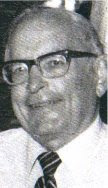
Retired in 1998 after a 50-year career of editing and publishing Colorado small-town weekly newspapers. He served as president of the Colorado Press Association in 1981 and was awarded an honorary lifetime membership.